

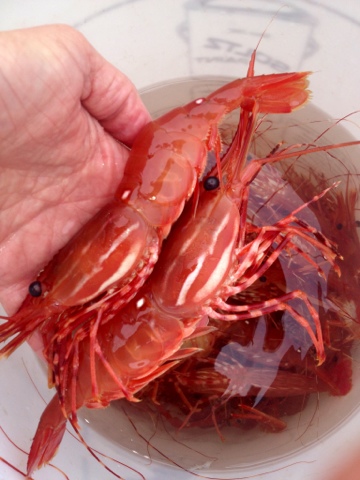
Over the years we’ve perfected our prawn procurement process quite a bit. We’ve gone from buying them over the bow, to our earlier harvesting process, to our current, more streamlined, process.
According to Captain Splendid, the key elements to happy, successful prawning is one of these tough little prawn pullers {because prawns are deep water creatures, you have to lower the traps an average of 300 feet, that’s a lot of line}.

The other key item is a basket like this to use for collecting and storing the line, the large yellow bouy marks the line when we return to collect the trap. Overseeing the operation is Arabella, she loves to eat prawns {raw} as well.

After dropping the traps, we usually wait about 3 hours before retrieving them, they theory is that if you wait much longer the prawns may take the bait and swim right out of the trap.

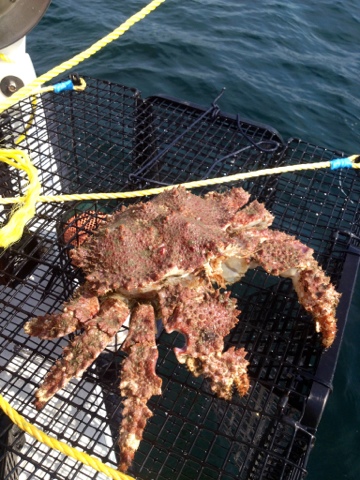
Many times we’ve been skunnked, starfished, or crabbed after patiently dropping our trap. For instance, this lovely Brown Box Crab was resting atop our trap when it reached the surface after travelling up 300+ feet. What a surprise that not a single prawn wanted to swim in to take a nibble nibble of the yummy chicken breasts and special pellets we’d left for them with this lovely lady guarding the entrance.
Other times, we’ve been seeing the world through coral colored glasses, and the Salish has given us a wonderful base for lunch. You really don’t need much when serving fresh prawns, but one of our favorite ways to eat the prawns is in tacos. I set up a bar of toasted corn tortillas, feta cheese {if you can’t get cotjia}, peppers, salsa verde, black beans, plenty of limes

and a frisky little coleslaw. I tossed this cabbage in a dressing of mayo, white wine vinegar, chopped garlic, old bay seasoning, lemon juice and green tabasco. It was a delicious crunchy, creamy contrast to the prawns.
.jpg)
.jpg)
oh! happy day!


Emily-
I am a boat chaser! The second they dock, I am there. Doesn't get any better!
I can wait to make the cole slaw!
Teresa
xoxo