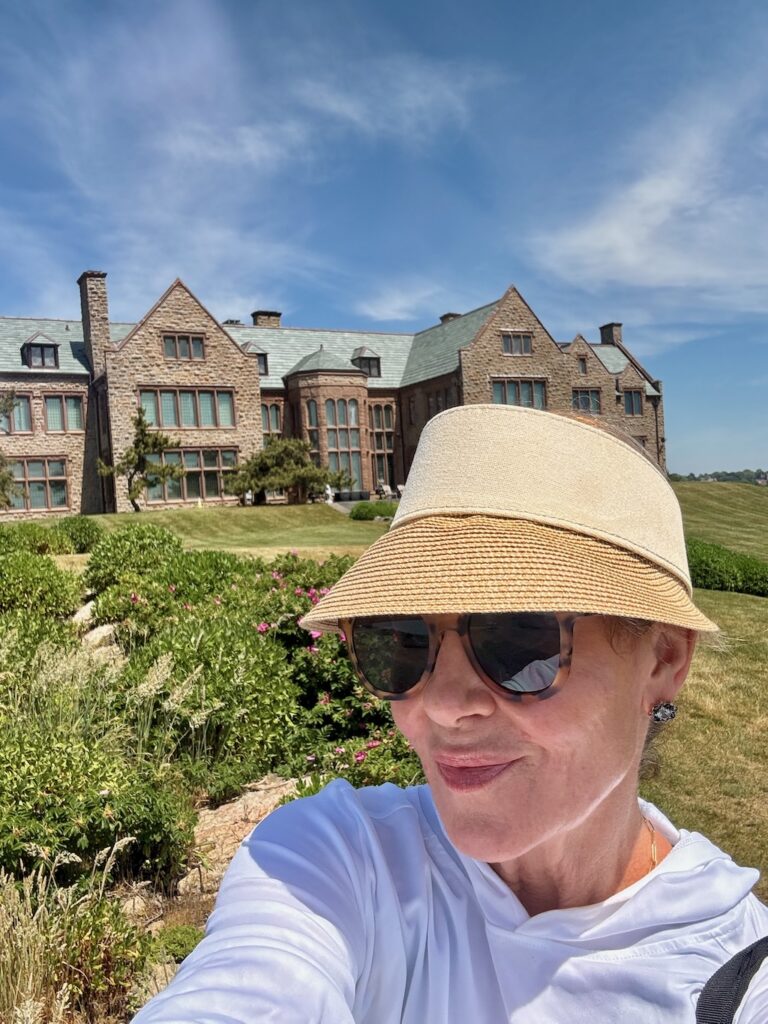
The Gilded Age is still alive and well in Newport, Rhode Island, and after spending a week there — sashaying in and out of all those mansions — I must admit, I miss it already. One of my favorite things about writing for Splendid Market is that it gives me a chance to revisit experiences and dig deeper into what made them so enchanting before sharing them with you. Today I’m excited to revisit Rough Point with you, along with some lush details I uncovered while researching this post. This house is an exquisite time capsule into the eccentric life of Doris Duke and the Gilded Age.
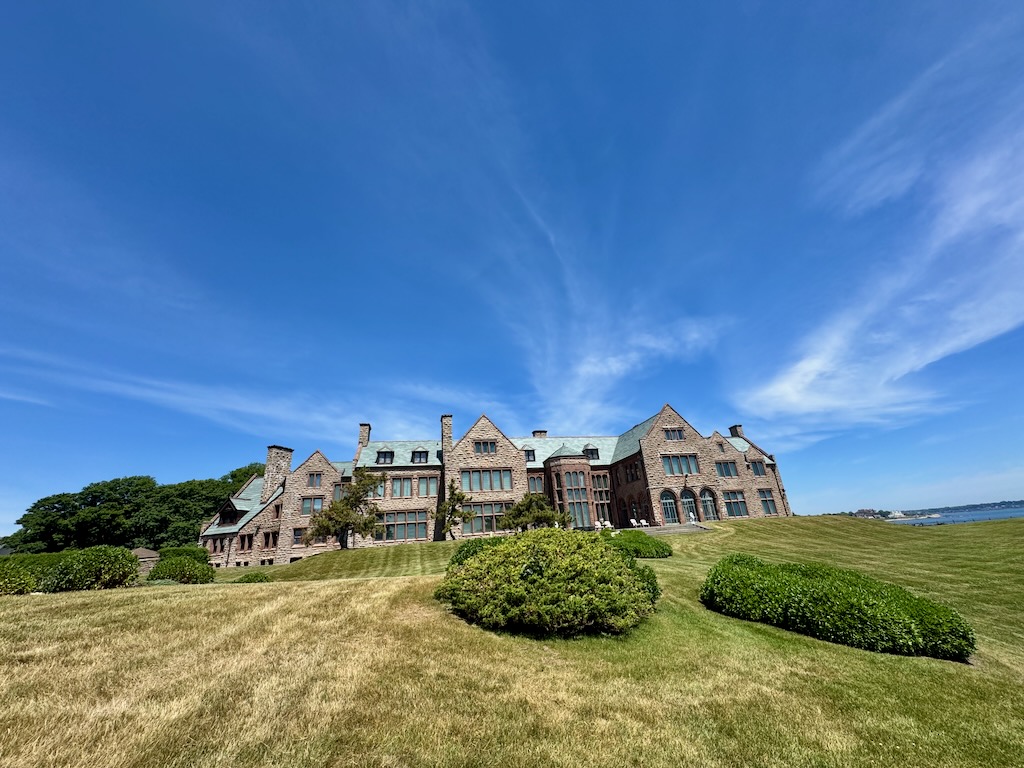
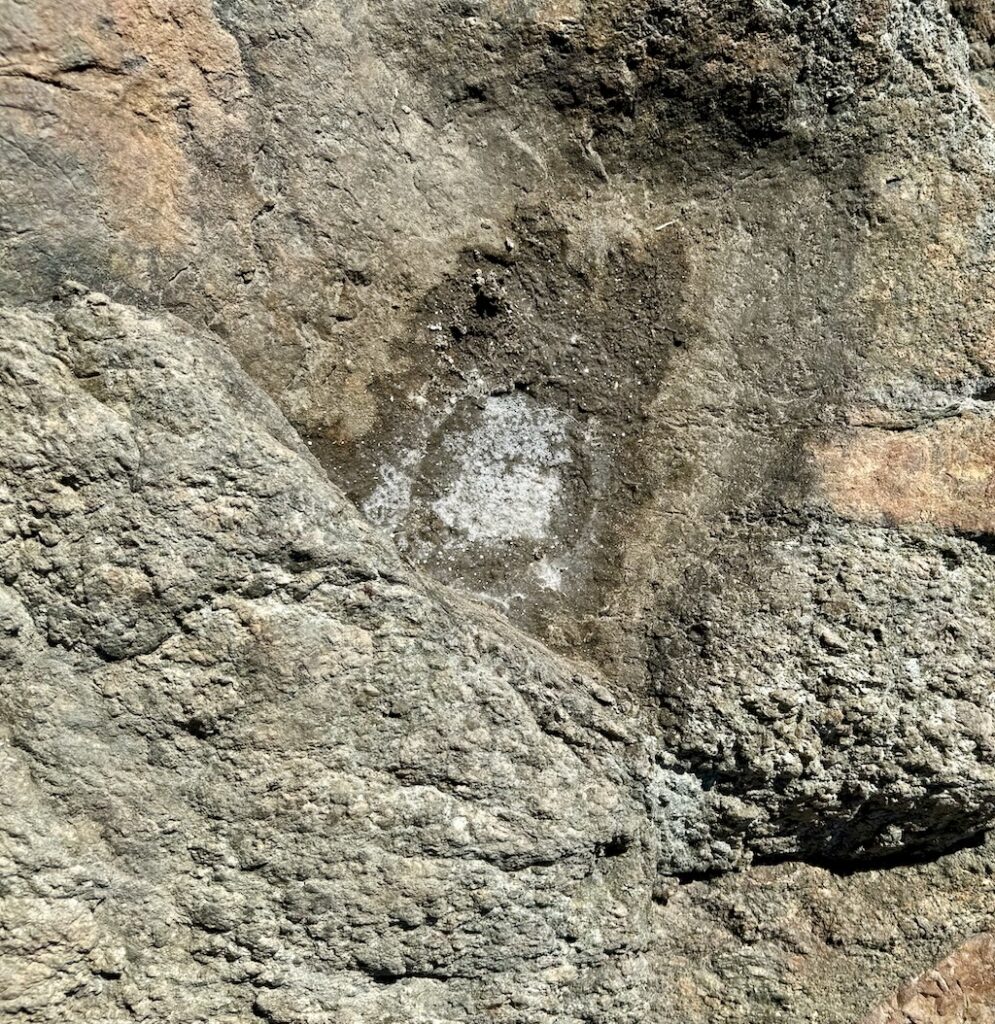
I’d heard about the mansions of Rhode Island for years but, readers, seeing them in real life was beyond anything I had imagined. An enhancing element to these grand homes is the Cliff Walk, the rugged coastal pathway that stretches along the mansions on Bellevue Avenue, where most of these grande dames perch. Here’s a shot of a little Atlantic sea salt I noticed that had collected along one of the more rugged sections of the walk.
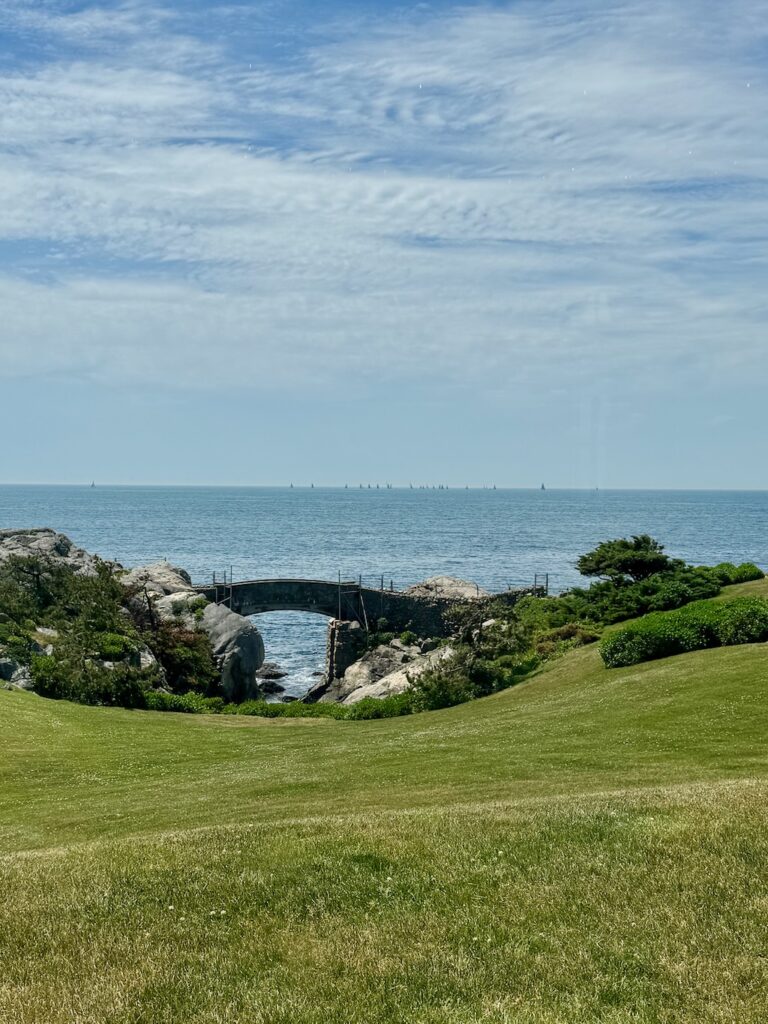
What drew us to Rhode Island was Captain Splendid and Captain Splendid Junior’s participation in the 172nd NYYC Annual Regatta. Here’s a shot I took of them sailing just beyond the Cliff Walk Bridge, from Doris Duke’s home, Rough Point, the final mansion I visited on the trip.
I really feel like I got to know Doris well on my visit and, perhaps, if I may share a fantasy, she and I could have had a splendid little friendship. She was quite eccentric, with great style and flair, a zest for life, and a true philanthropist for causes near and dear to my heart.
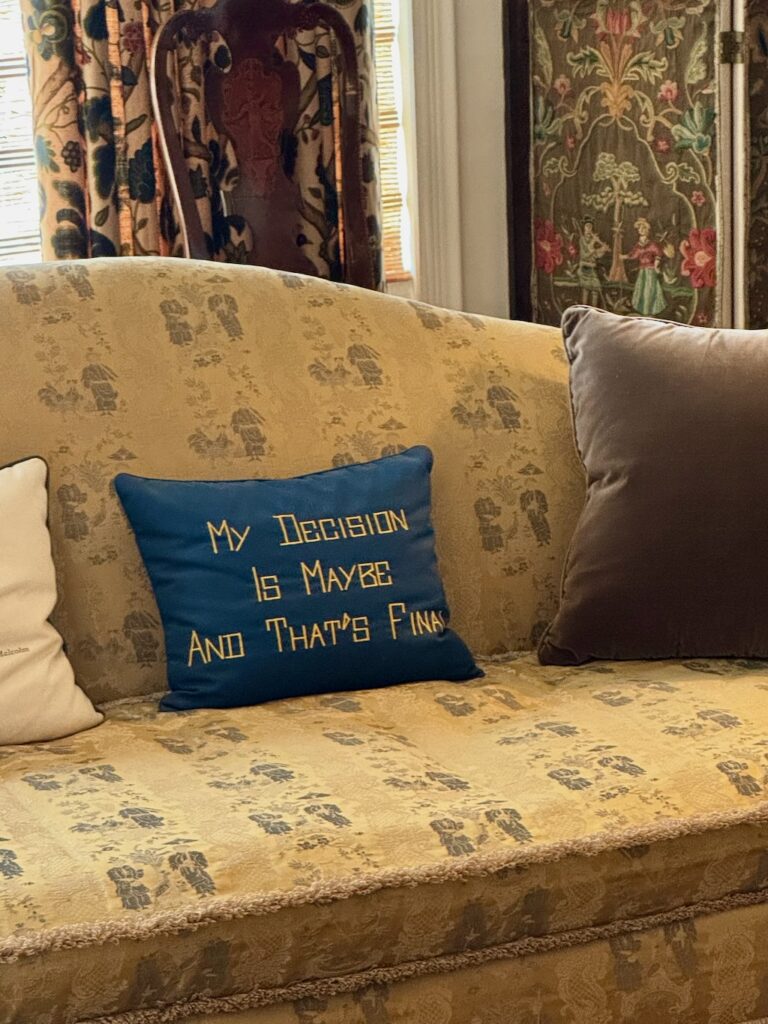
We also share the same commitment to being committed to being non-committal.
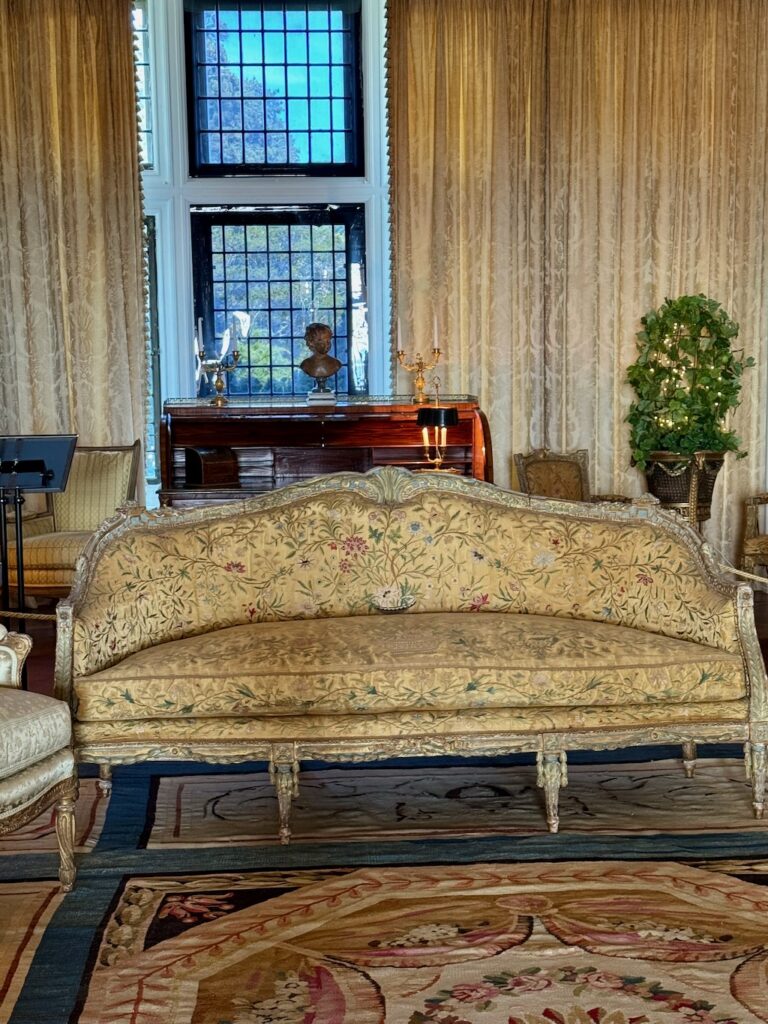
When I arrived, I had to resist swooning over the gorgeous Louis XVI yellow embroidered silk botanical upholstered sofa, upon which, I’m sure, the butler would have asked me to sit before my fantasy lunch with Doris.
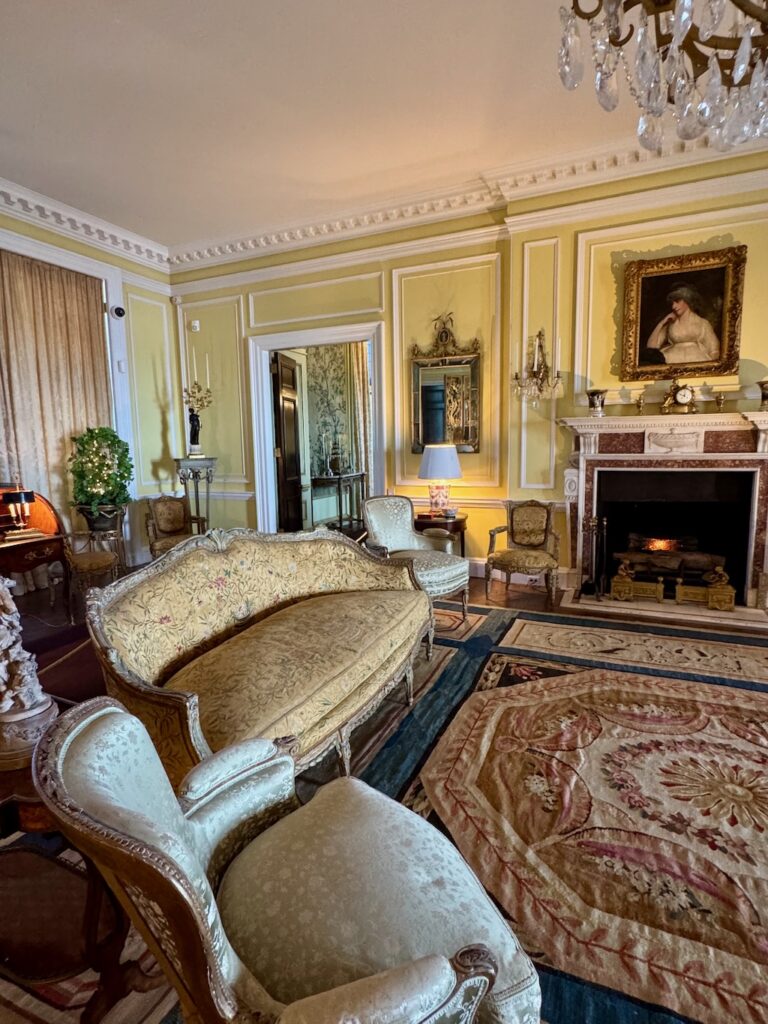
Doris and I would have to discuss which shade of yellow she’d chosen for this room, since it’s very similar to the yellow in my family room {with white trim, I may add}. I’m due for a refreshing new coat of paint and may prefer this tint.
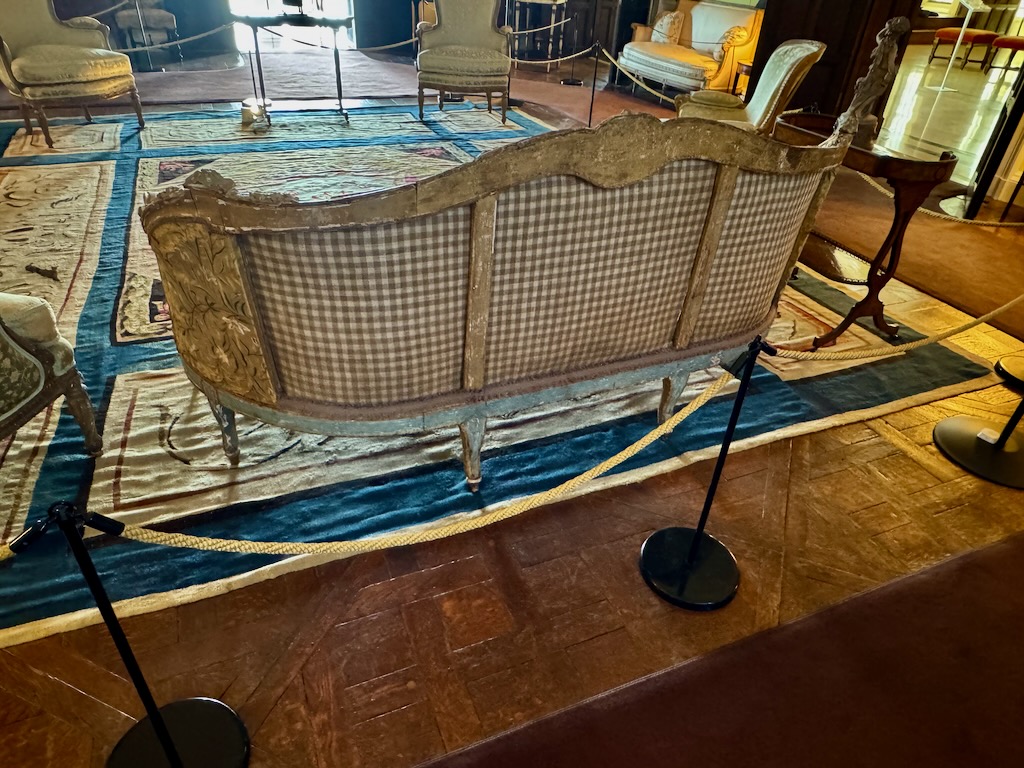
Do you think it would be too brash of me to ask to see the “Falconet” marking on the suite of Louis XVI-era seating in the room? Pierre Falconet was a master furniture maker in Paris who was succeeded by his son, Louis Falconet, who earned his own master’s certification in September of 1743. Under the guild system, French cabinetmakers and chairmakers were required to stamp their pieces, much like the hallmarks you’ll see on silver. Bearing the stamp “Falconet,” or in this case probably “L. Falconet,” means the piece came directly from that workshop — a significant distinction.
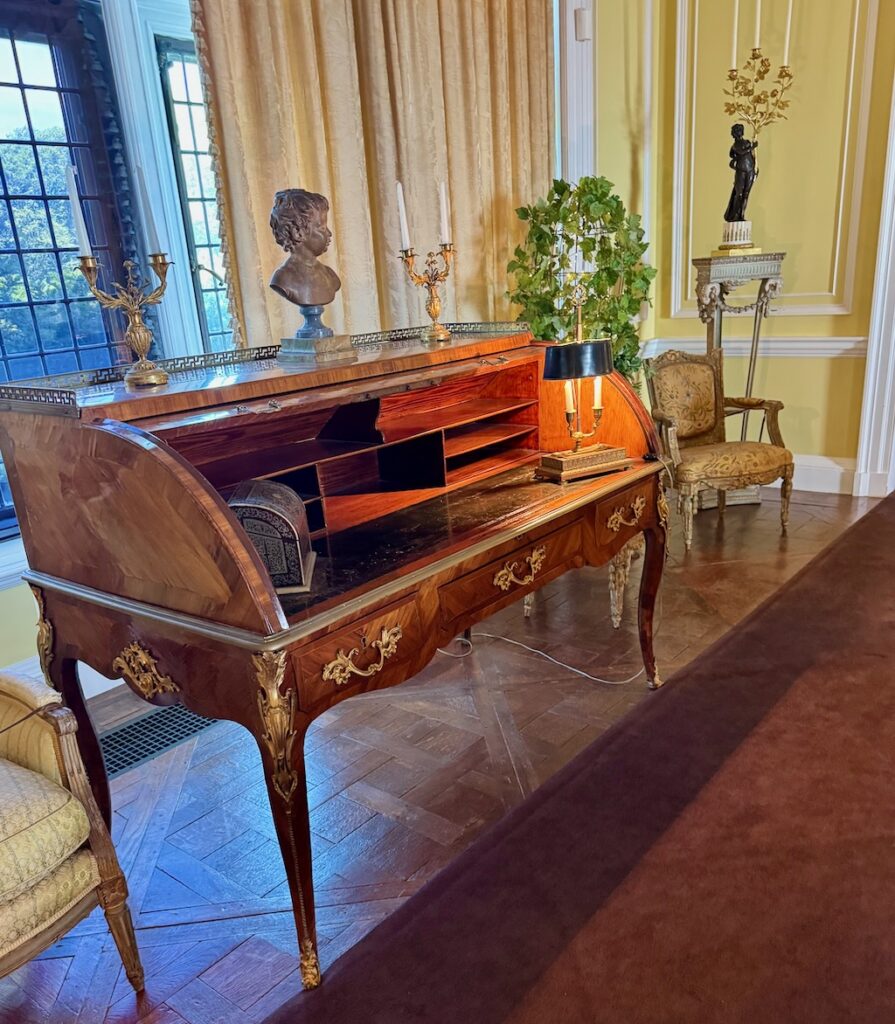
Like me, Doris seemed to believe in having a little command center in her family room as well — though her desk is a bit more grand than mine. Her ornate French cylinder desk is probably a nineteenth-century piece. Look at the gilt-bronze mounts and the serpentine bombé lines, with kingwood and tulipwood veneer and intricate crossbanding. Mine’s a yellow-painted Provençal-style piece, also imported from France, but with more rustic patina than polish. I wonder if she sat there to write her thank-you notes, as I do? Maybe her tiered pigeonhole compartments were as stuffed with needed notes and her daily diary as mine are?
While we’re on the subject of wood, note the Versailles parquet floors she purchased in France to be installed at her home in Hawaii, Shangri La. She later decided they were better suited to Rough Point, so she had them lifted from the Hawaiian floors and sent here to Newport to finish off the Yellow Room.
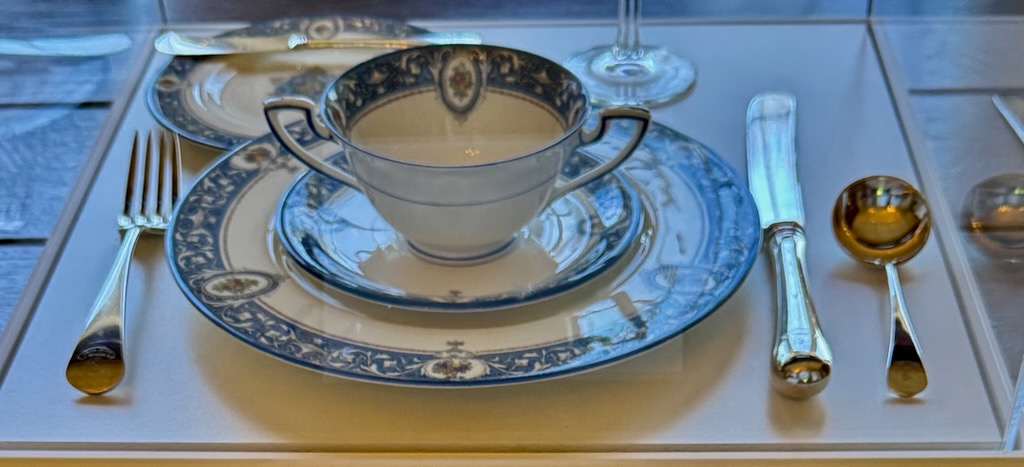
Should I be invited to lunch, perhaps the table would be set with this Royal Doulton Portia pattern and this Gorham silver from Providence, RI. I’m sure it would start with a lovely lobster bisque.
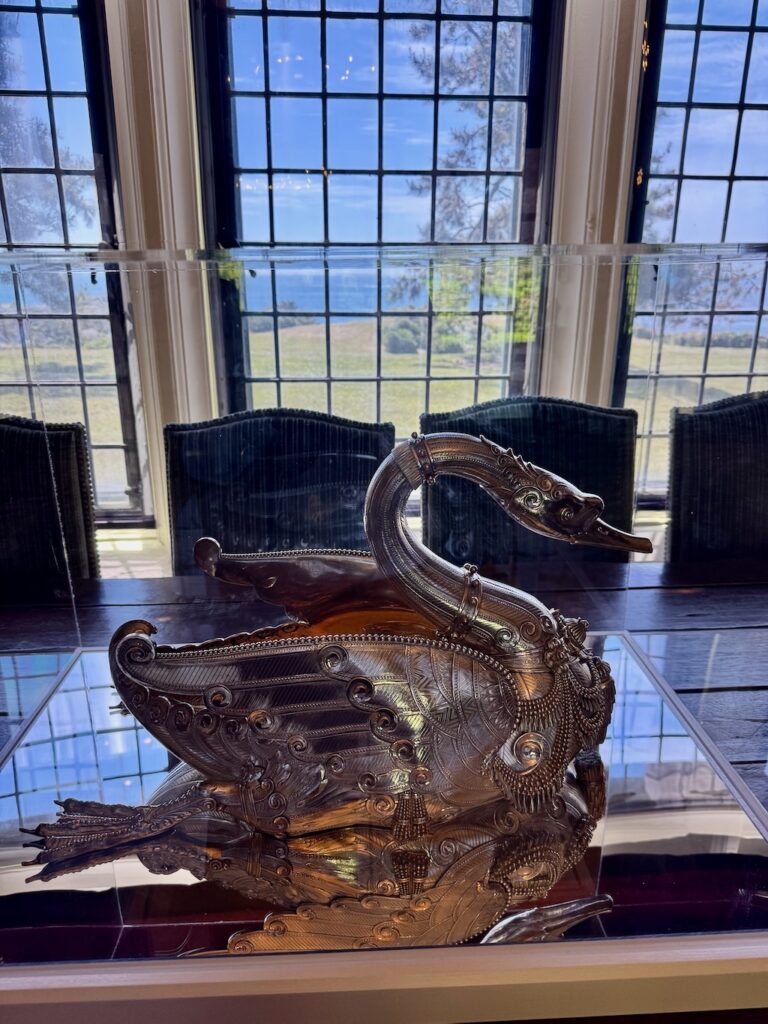
Perhaps this incredible silver swan would be filled with a bouquet from the garden. This unique piece was one of her favorites — she brought it with her to all of her homes: Duke Farms, Falcon Lair, Shangri La, and her New York penthouse. The designers reportedly studied the swans in Central Park while creating it. Doris bought it at auction in 1988. It’s sort of hard to see in this shot, but it’s made of sterling silver with gold vermeil {gilding} on certain parts of the swan’s body, so the gold accents reflect the light differently and emphasize particular details against the silver.
This piece was made by Edward Moore (1827–1891), the man responsible for making Tiffany silver famous. He trained as a silversmith at his family’s shop, which became Tiffany’s exclusive supplier starting in 1851. In 1868 he sold his business to Tiffany and became their chief silver designer. He’s credited with turning Tiffany into the famed design house it is today — he really put them on the map when the company won its first international award for silver in Paris in 1867.
The Dukes added this ballroom to the house, and it was here where Doris was presented to society in 1930. It later became the Music Room, and this is where Doris would take her piano lessons and practice the instrument daily. This may have been the foundation for her deep, lifelong love of music. I’m not sure, but maybe if I had grown up with a room like this for practicing and lessons, perhaps I would have been a more talented pianist?
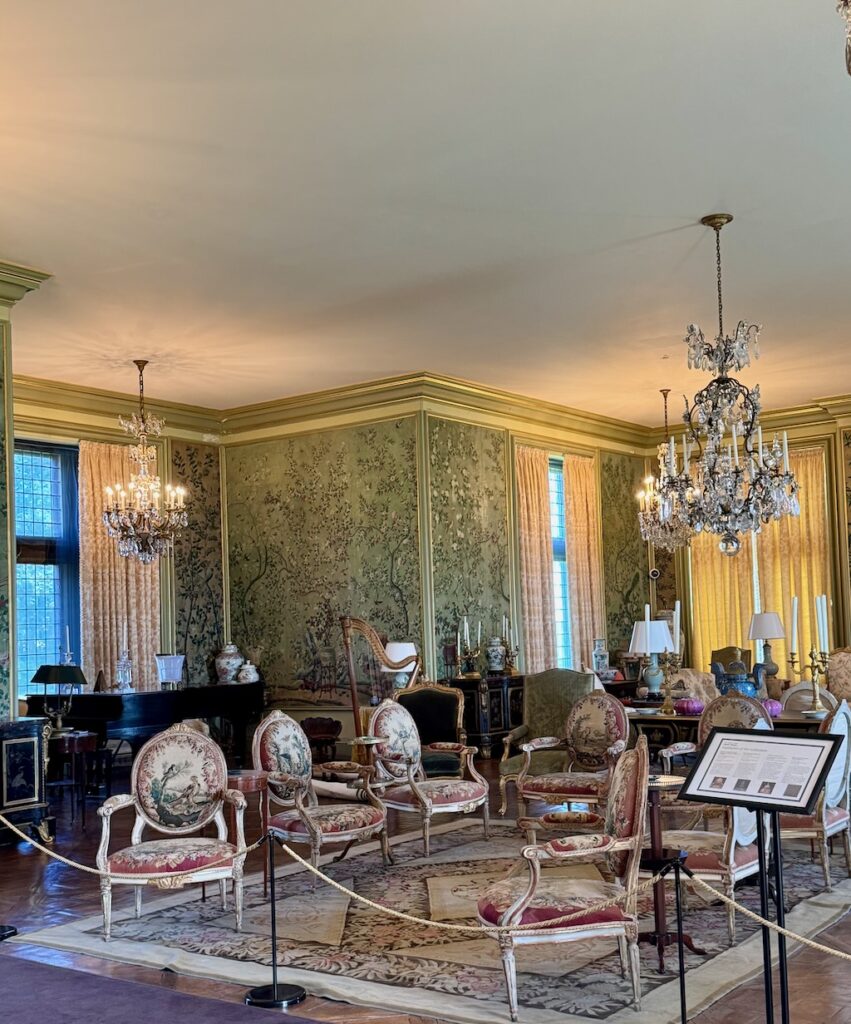
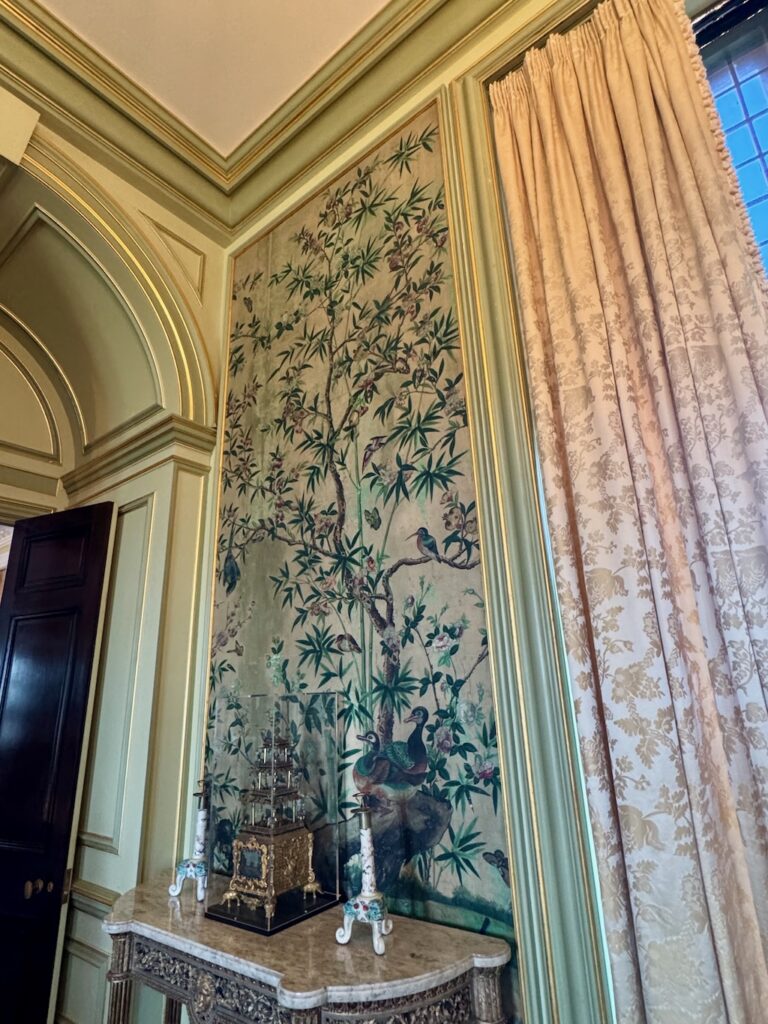
Doris purchased incredible hand-painted, eighteenth-century Chinese export wallpaper depicting botany and birds, and had it cut to fit the gilded boiserie panels. I just love these calming, organic colors and the natural, peaceful designs. The flowing trees with birds, fluttering butterflies, and mandarin ducks at the base are so tranquil, creating an ideal surrounding for her parents’ Qianlong-dynasty porcelain pieces and other treasures she collected.
She had purchased a pair of pagoda-shaped musical clocks on her travels — you can see one of them on the table below. The clocks would be wound up so they could play tunes on a set of bells, as small jeweled elements on each tier lifted, lowered, and rotated to strike the bells.
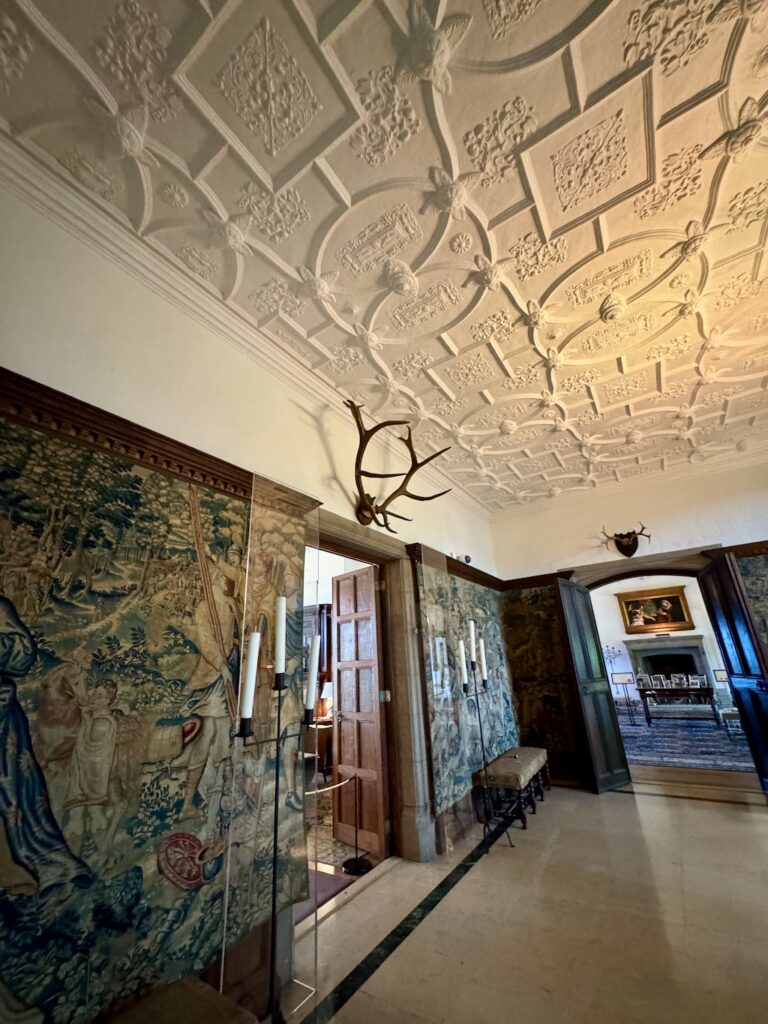
The grand entrance hall is a remaining nod to the original design of the house. It was built for Frederick William Vanderbilt from 1887 to 1892 as an English Manor summer house. Two stories of oak paneling were bridged with a stairwell imported whole from an actual English manor house.
But Doris and her father made their own mark in this section as well. The Flemish verdure-style tapestries were acquired by her father, James B. Duke, in 1923.
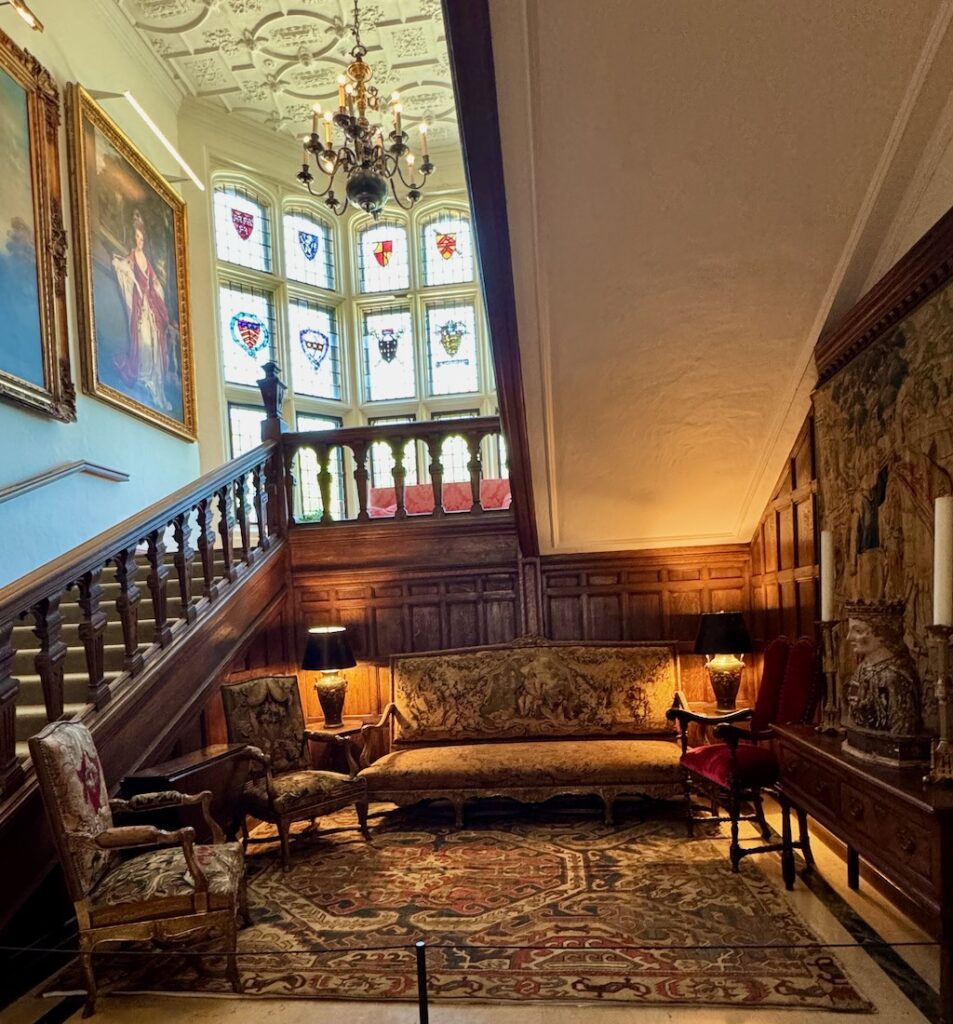
Most unique and fascinating are the “Magna Carta windows,” depicting the coats of arms of the barons who signed the 1215 charter, with the crests continuing into the Great Hall (15 additional coats of arms, all 25 barons, plus other notable figures present at the signing).
Not surprisingly, the kitchens of the mansions I toured tended to be my favorite part of the structures. Most of them dominated the entire subterranean section of the buildings, and I loved imagining the hustle and bustle that occurred on the nights of a big party, and what may have been going up and down their giant dumbwaiters.
At Rough Point, the kitchen was smaller and located on the main floor, adjacent to the dining room, and even had a window with a wonderful view out to the sea.
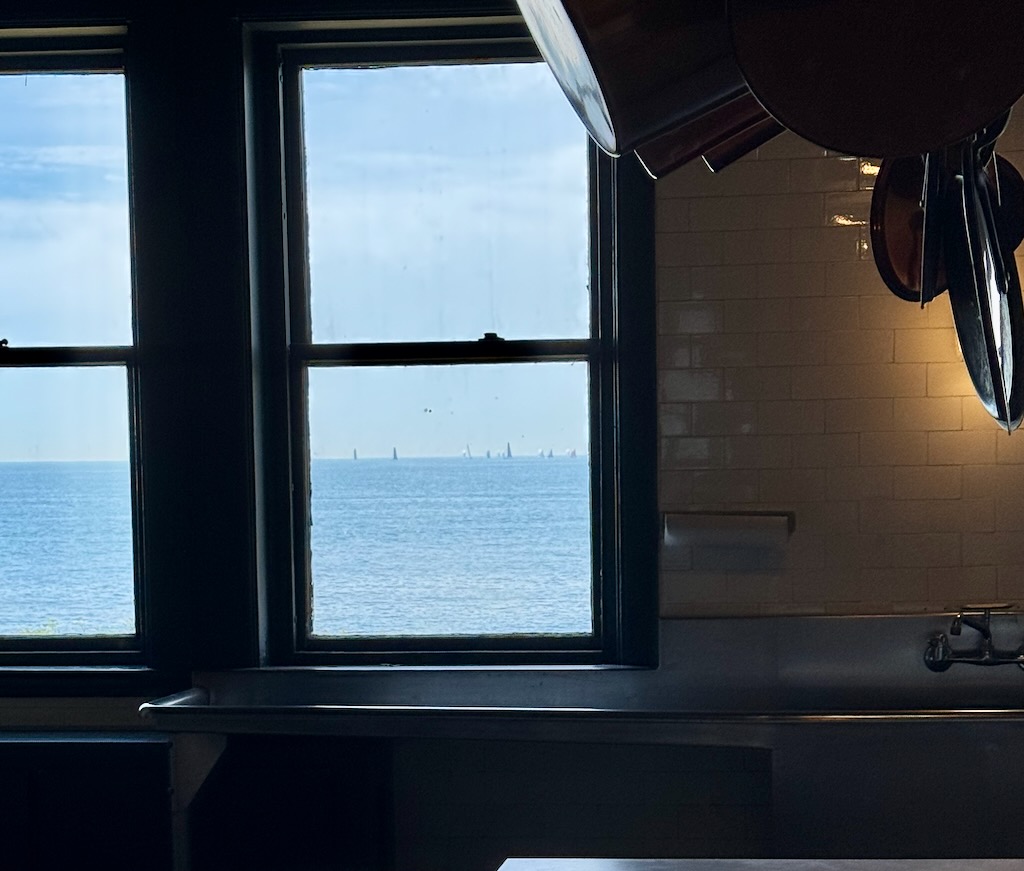
Reportedly, Doris personally chose this dark green trim color.
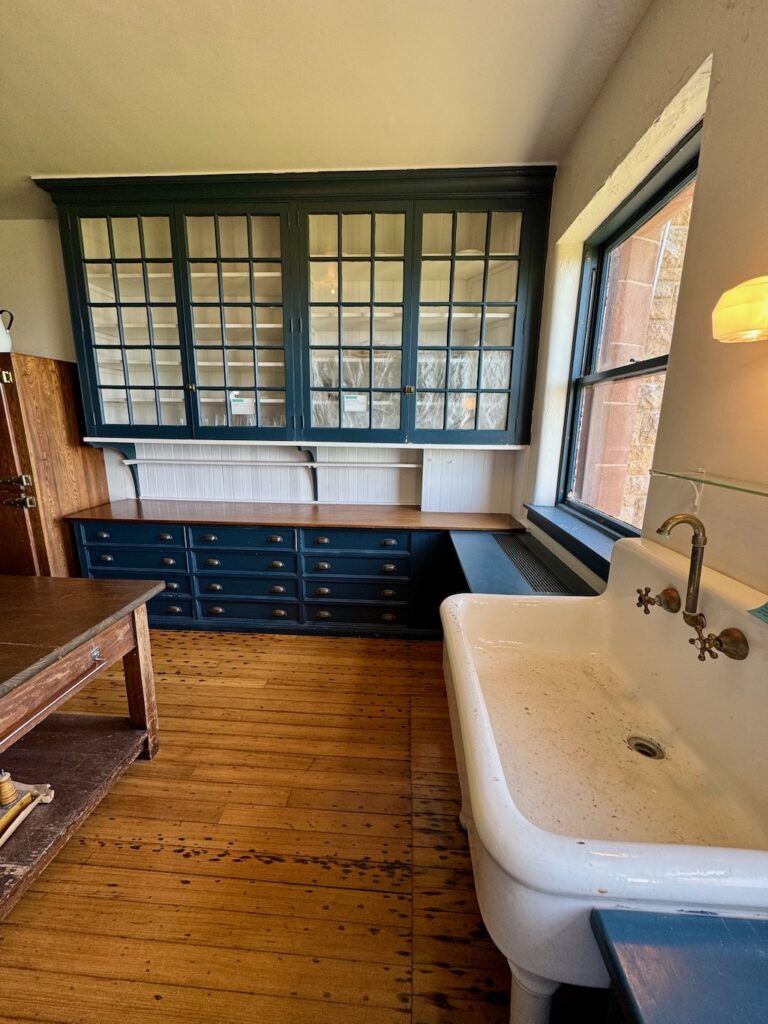
Many of the kitchens I lingered in used shiny white “subway” tiles like these, which are easy to clean.
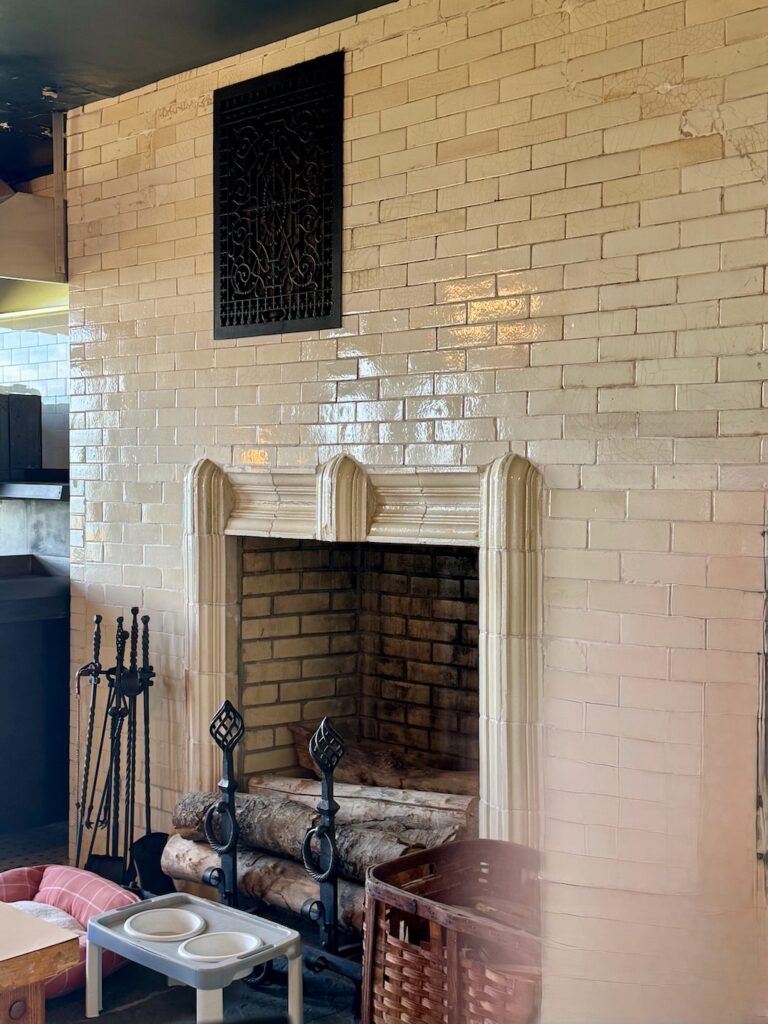
I loved this fireplace with the doggy bed and dishes nearby. Doris was known to have 10 to 12 dogs at any one time, mostly German shepherds but also some greyhounds that she rescued from shelters. The dogs were allowed to run freely throughout the house.
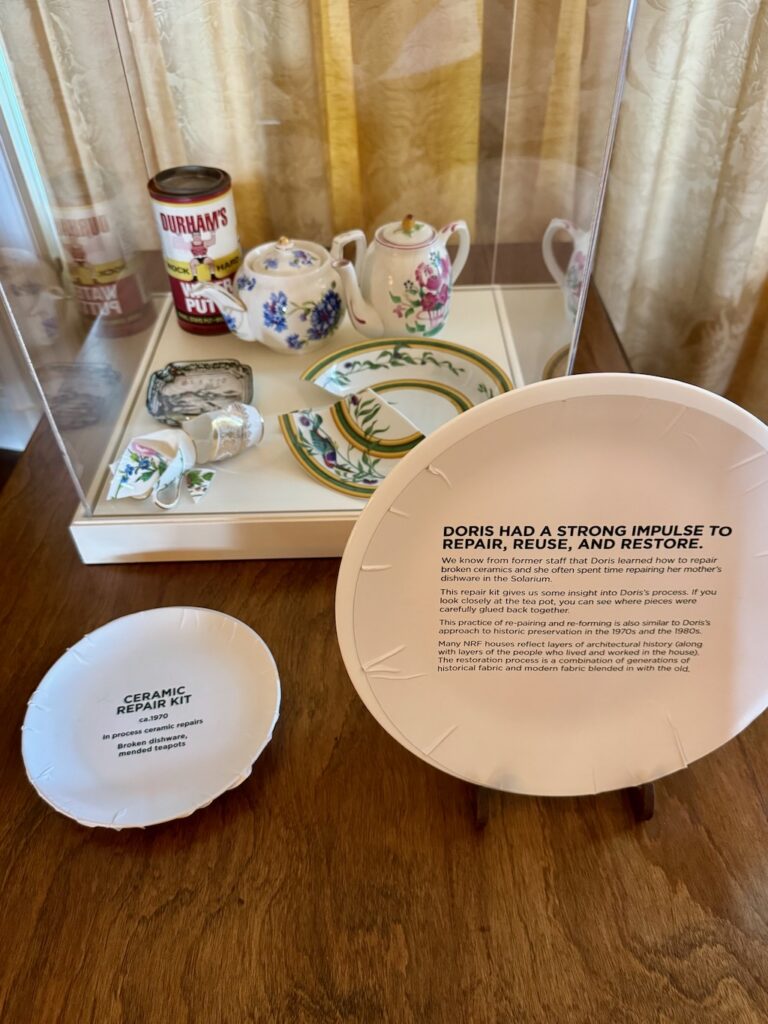
Free-wheeling tails and paws don’t always go well with fine china, but Doris didn’t mind — she just repaired them. She used Durham’s Water Putty. I don’t shy away from repairing broken china either — it’s like putting {back} together a beautiful puzzle. I may try Durham’s, but to see how I like to repair mine, with clear silicone, click on cracked crocks.
Next post, we’ll go upstairs, where things get REALLY interesting…