

The souks of Marrakech are deceptive: what looks like a market is also, quietly, a factory. Long before the finished goods pile up in the stalls — the babouches in their rainbow rows, the leather poufs hung like giant macaroons, the pyramids of roasted almonds — there is the making. On this visit, I had the chance to stay close to the craftsmen: the man sliding trays of almonds in and out of a giant fire burning oven, and the leather cutter who moved his knife with such precision, tracing the curves that will become a pouf; the felt-maker coaxing boiled wool into the shape of a slipper. This is the Splendid Market I want to show you today — not just a place to buy, but a place to understand how things come into being.
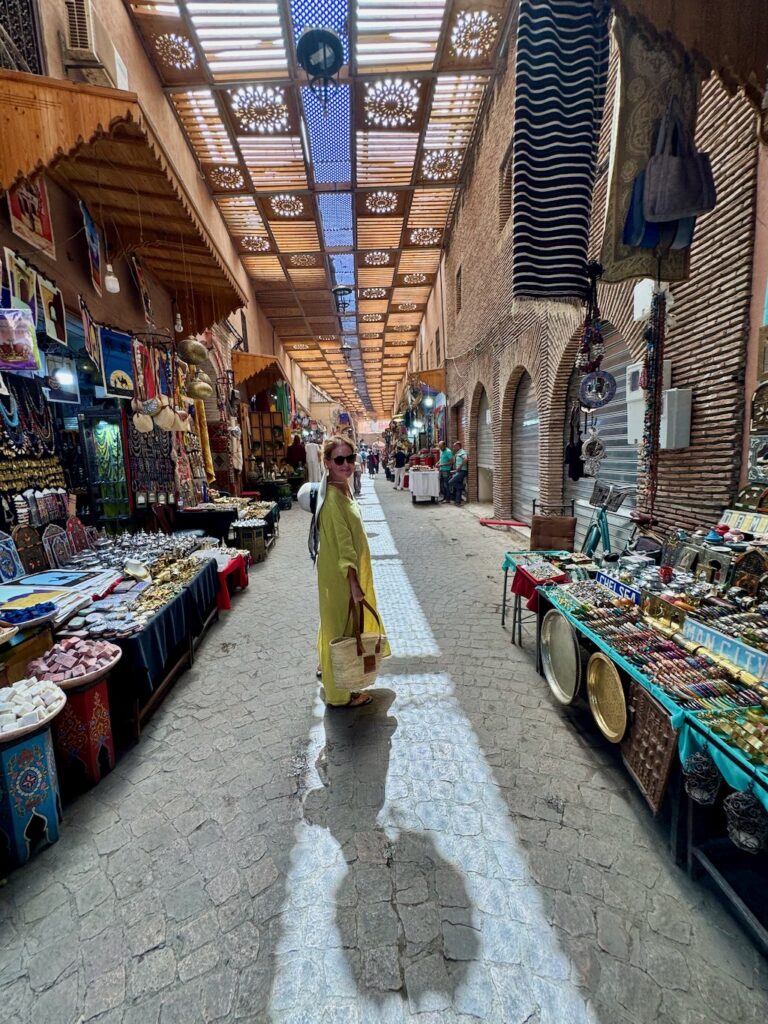
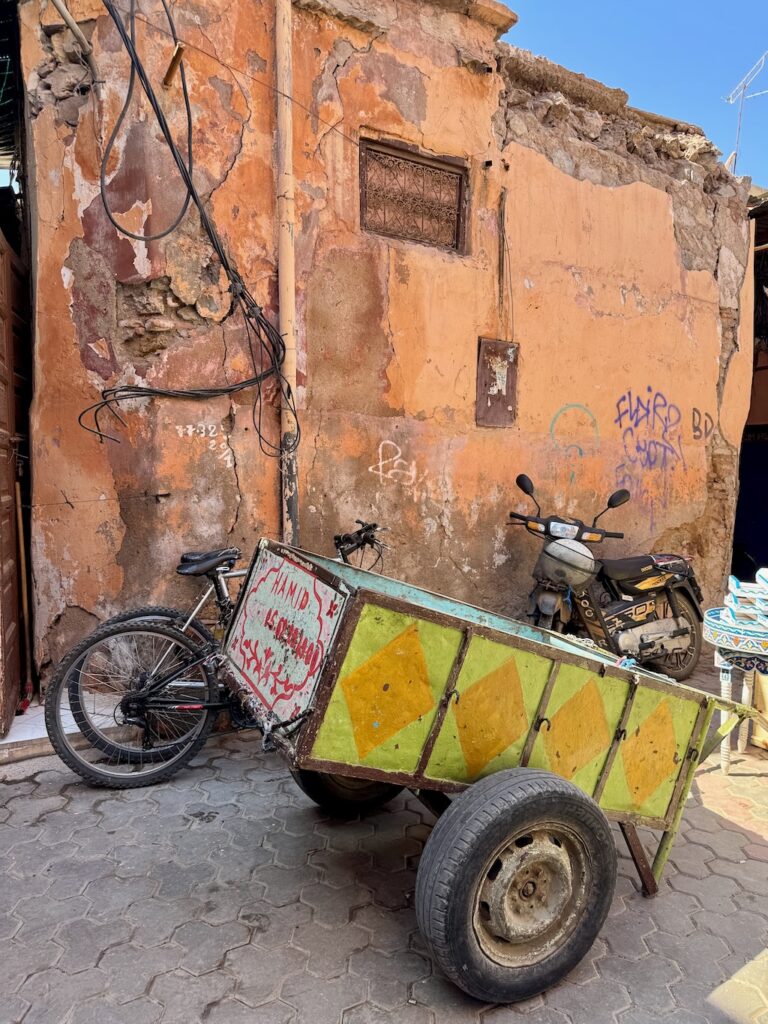
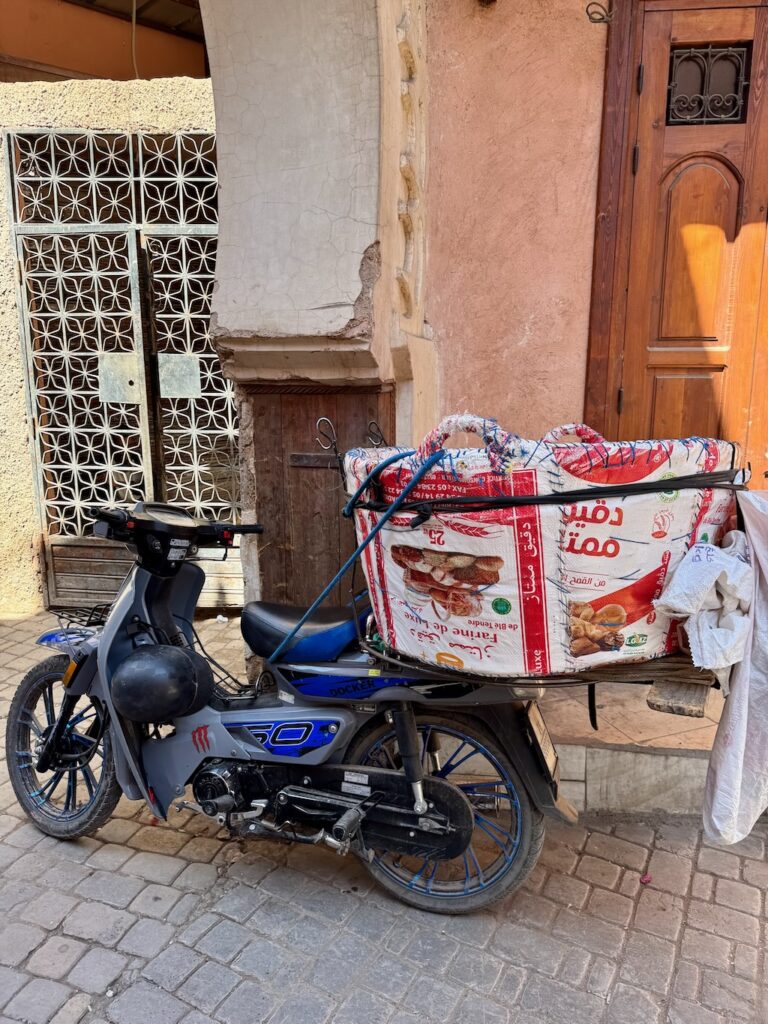
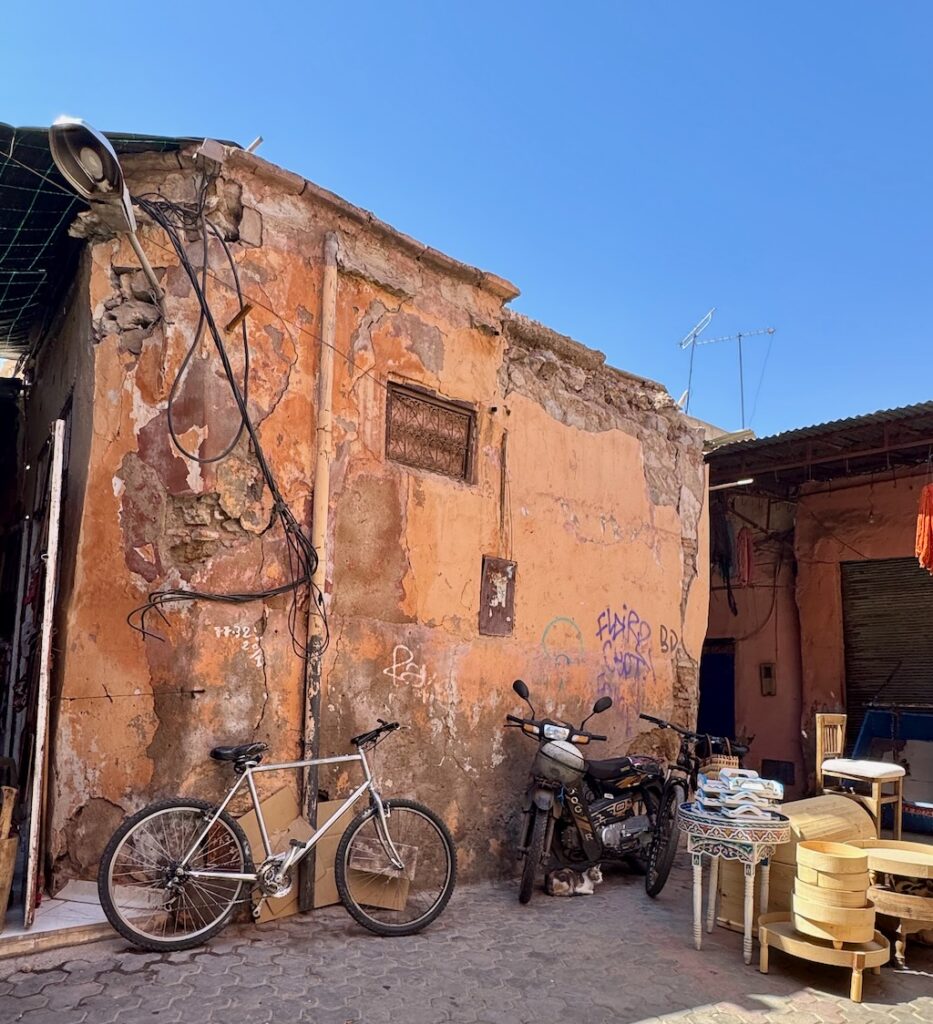
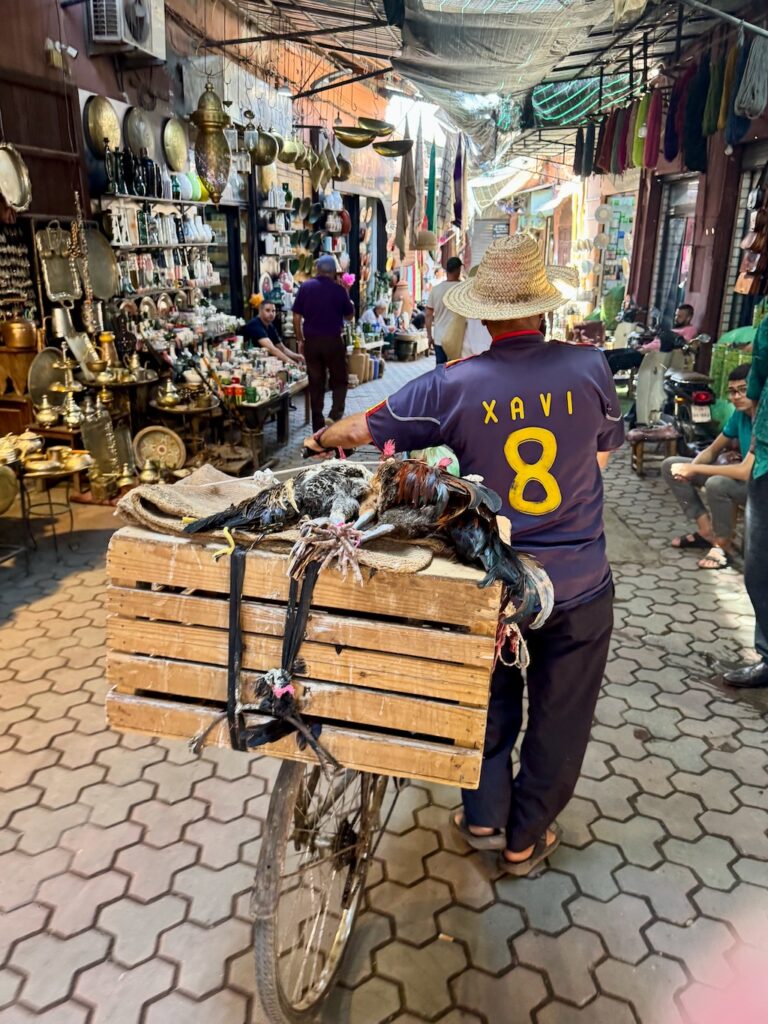
The souks of Marrakech are a labyrinthine of markets, each section traditionally devoted to a single craft. Rustic carts {man or donkey powered}, bikes and motorcycles are used to transport the raw and finished products throughout the area. Behind every stall selling something beautiful, there is almost always someone, nearby, making it.
Here’s a general layout: enter through Souk Semmarine — the grand covered artery lined with pottery, fabrics, and souvenirs — and the maze unfolds from there.
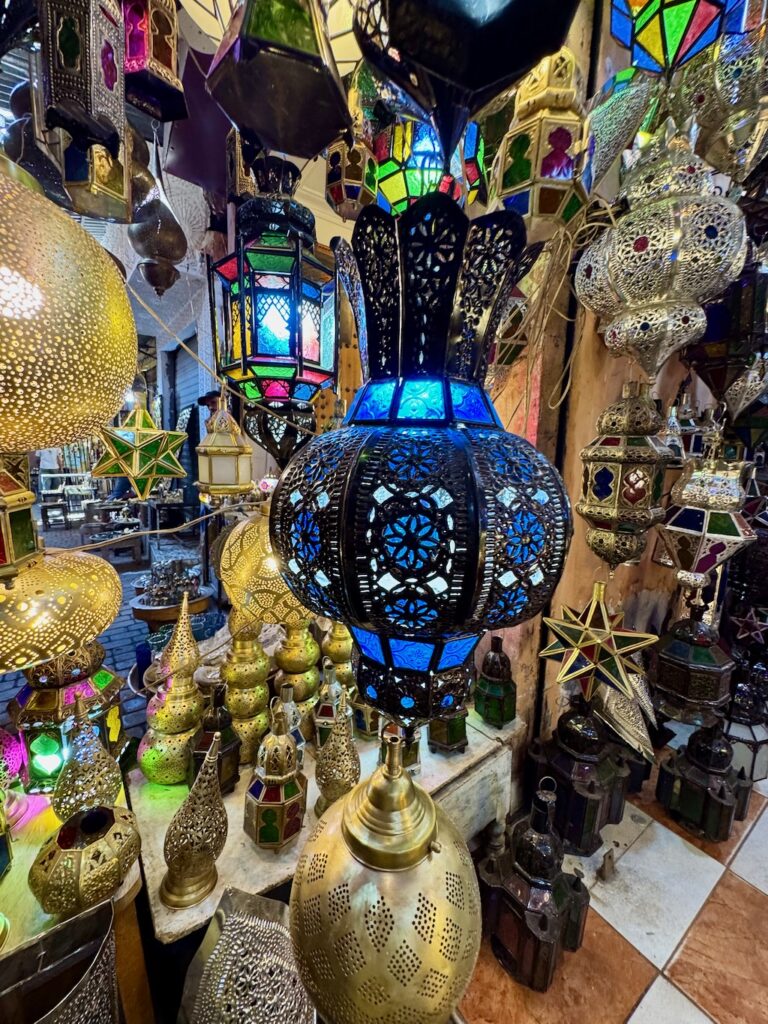
Follow the scent of leather into Souk Cherratin, or the glint of brass into Souk el-Attarine.
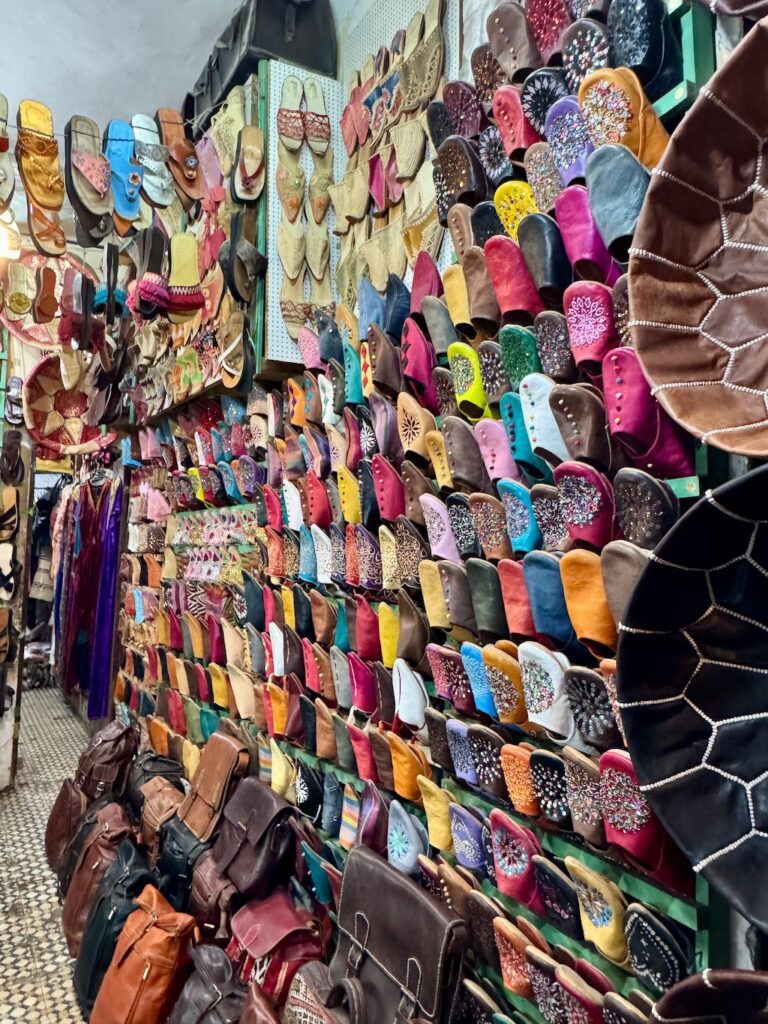
Hunt for hand-knotted Berber rugs in the Carpet Souk near Rahba Lakdima, or lose yourself among the rainbow rows of babouche slippers in Souk Smata.
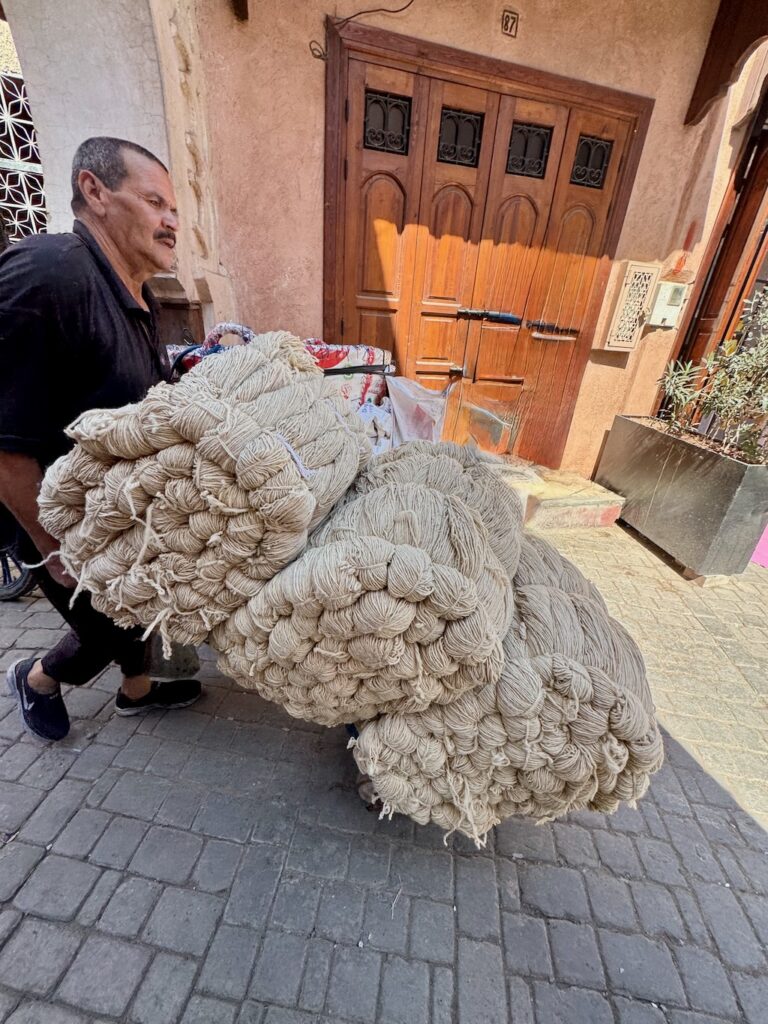
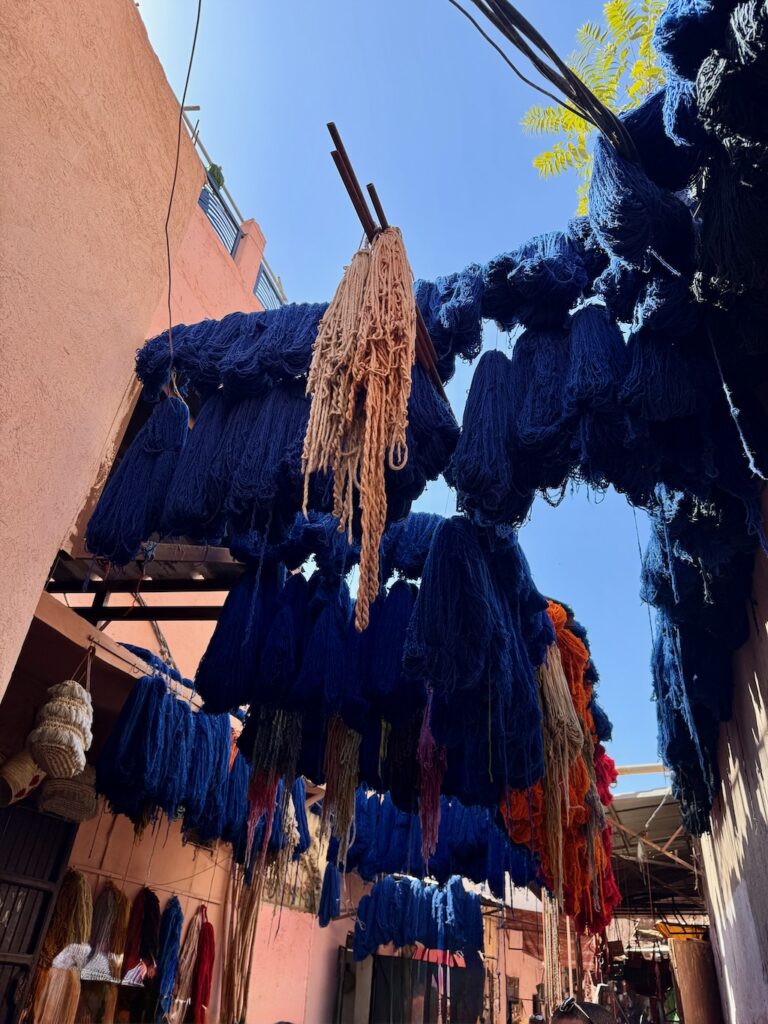
Further in, blacksmiths hammer away in Souk Haddadine, cedar shavings drift from Souk Chouari, and the Dyers’ Souk — Souk des Teinturiers — blazes with skeins of freshly dyed wool strung between rooftops.
It’s a living museum of Moroccan craftsmanship, the souks reward those willing to wander.
Shall we wander?
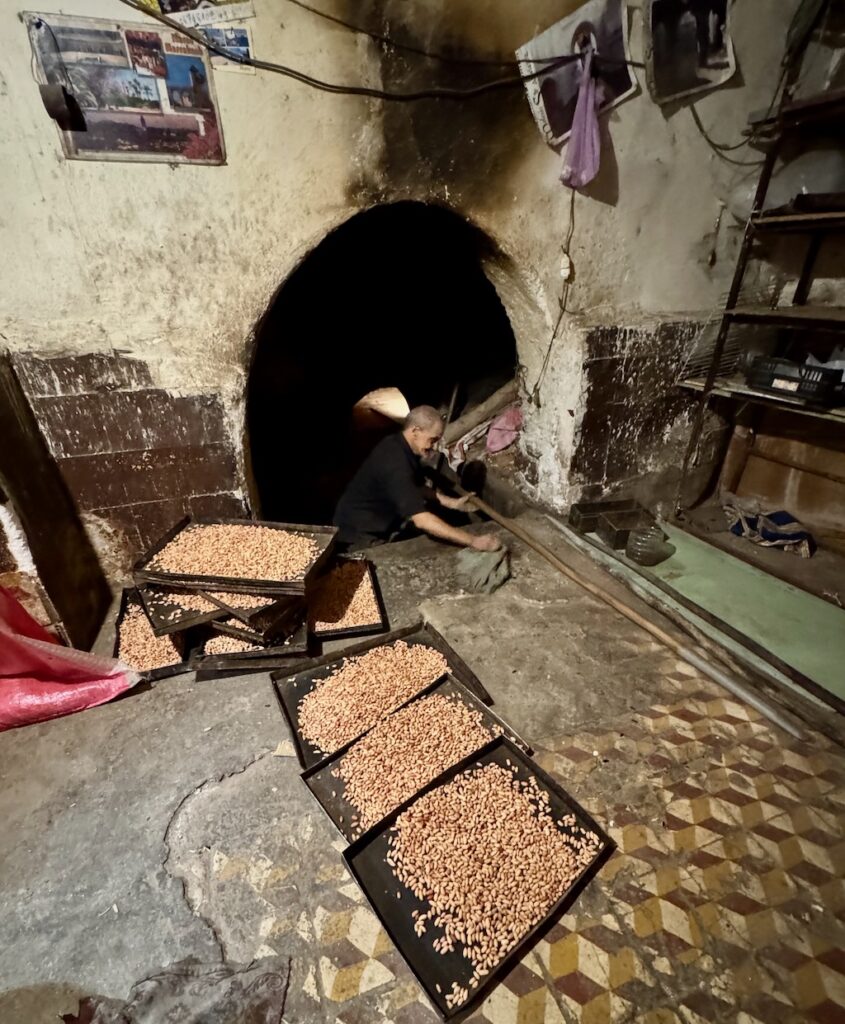
Huge woodburning ovens are a cooking source for the community. Here, the baker uses rustic peels to slide trays of almonds onto the flame heated surface until they are roasted to perfection. Almonds are Morocco’s most important nut crop, covering around 151,000 hectares with an average production of roughly 99,000 tons.
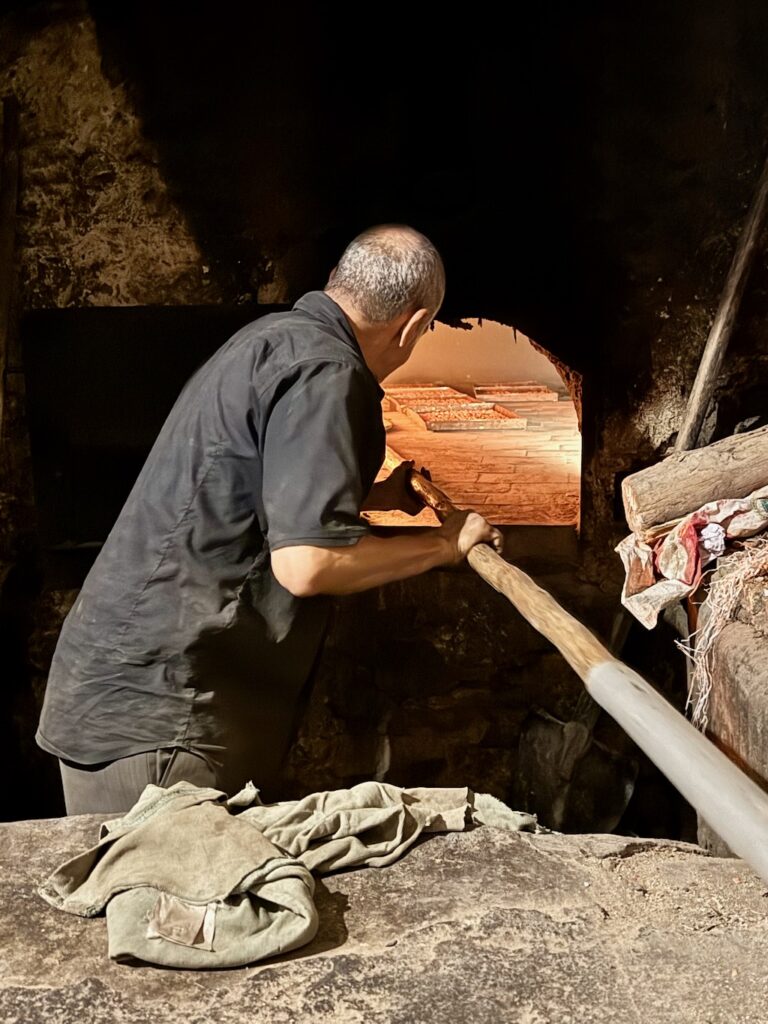
Words cannot begin to describe the sensory experiences I felt when he handed me a few nuts straight from the oven.
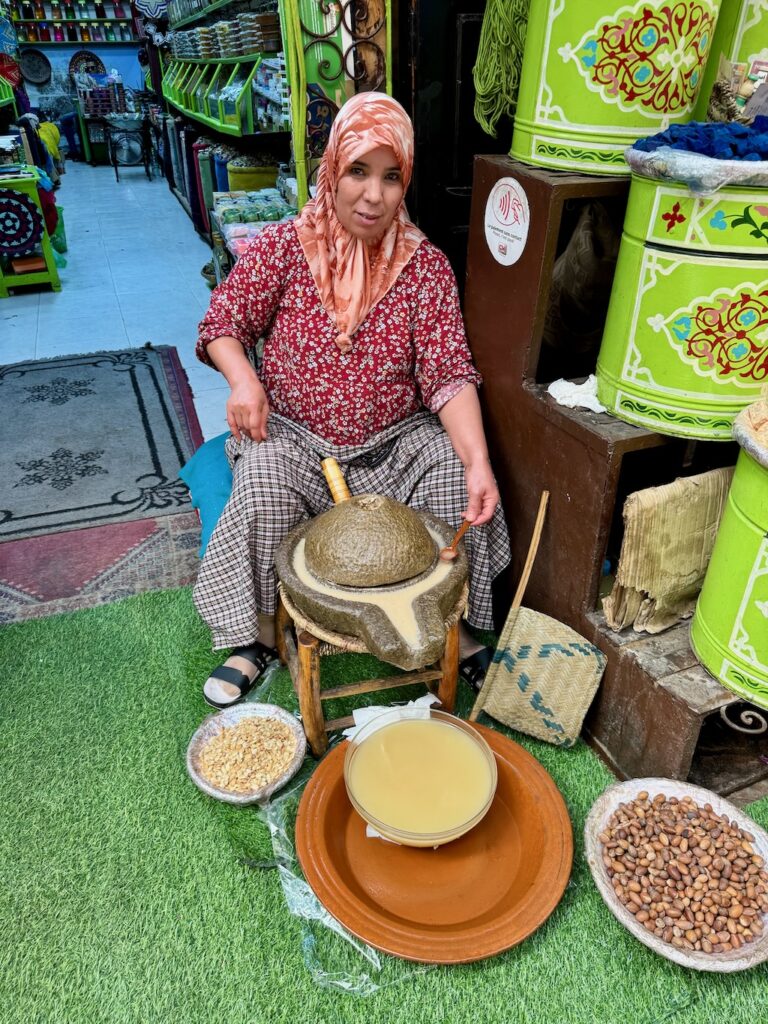
The cracking of the almonds has been mechanized for the most part but hand-cracking is still practiced. These almonds may be sold as is, used in traditional pastries or to make amlou, Morocco’s beloved almond-argan butter — traditionally made by women’s cooperatives. To make it the toasted almonds are ground with pure argan oil using a stone mill, organic honey is added for the finish, it’s positively delicious on apple slices or toast.
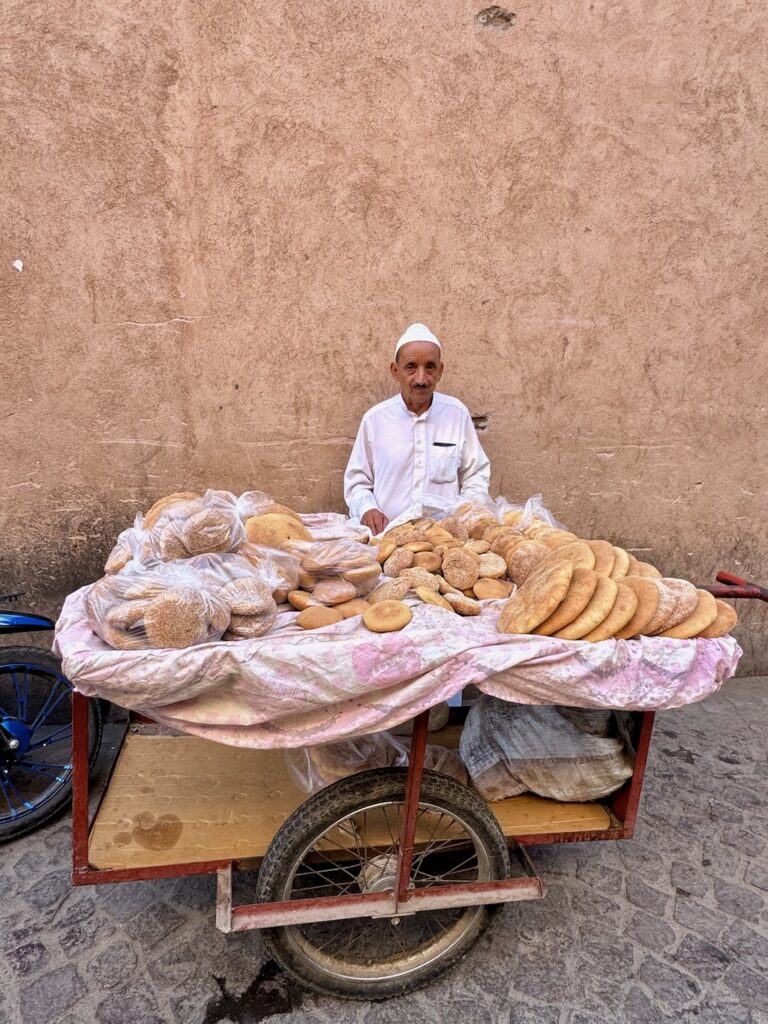
The community ovens are also used to bake breads sold in stands and served at local restaurants.
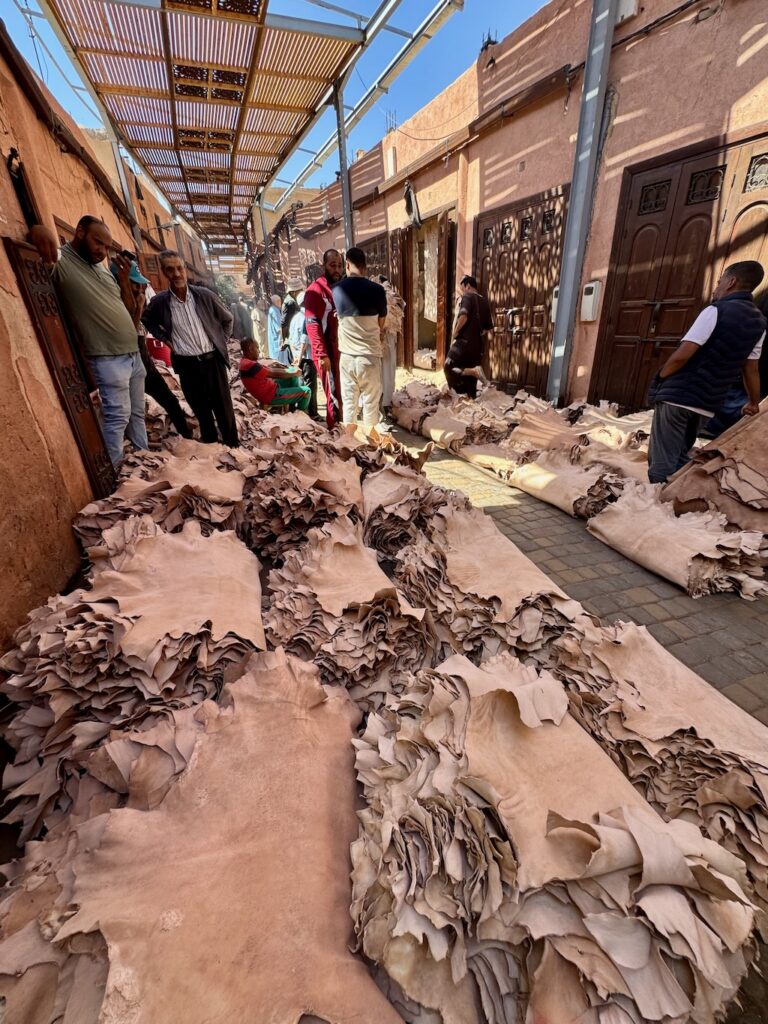
Rounding a corner, we stumbled into a leather auction — hides changing hands before their transformation into babouches, poufs, briefcases, basket handles and sandals. The merchants who’d eventually sell these finished pieces were here first, bidding on raw bundles, tracing the life of an object back to its beginning.
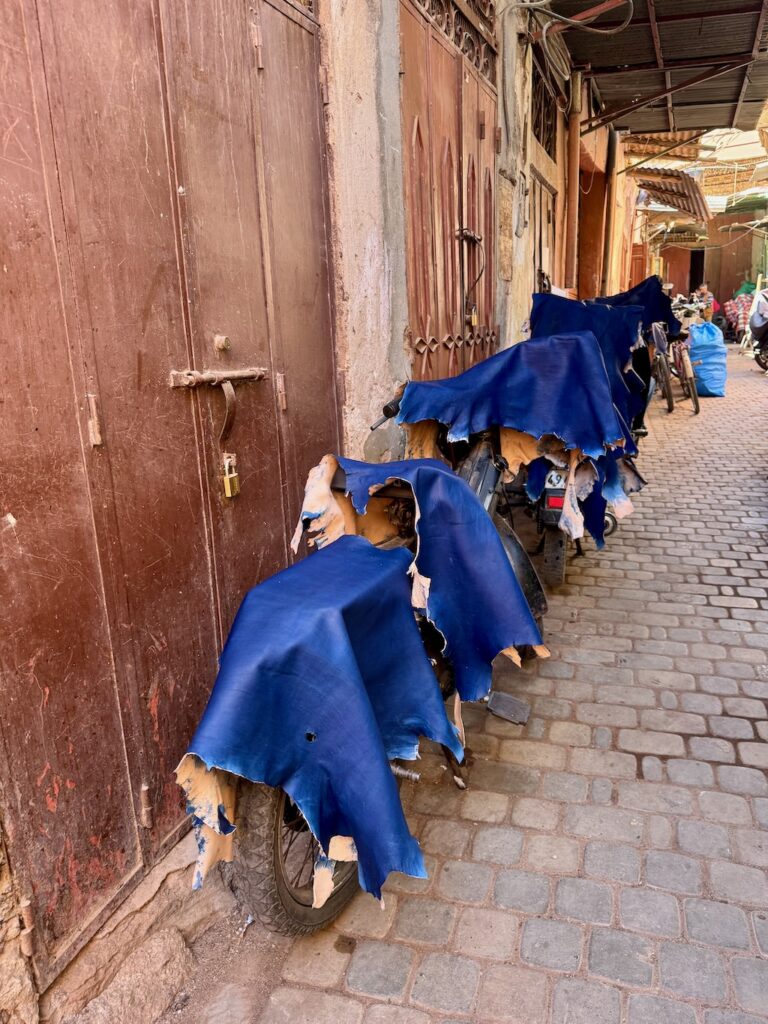
We saw similar hides dyed blue and drying before becoming…. your guess is as good as mine {?} but I’d buy anything in that Yves Klein blue!
This man is stitching tanned leather trim onto zipped pouches which will probably be embroidered, embellished and otherwise finished before being put on display for sale.
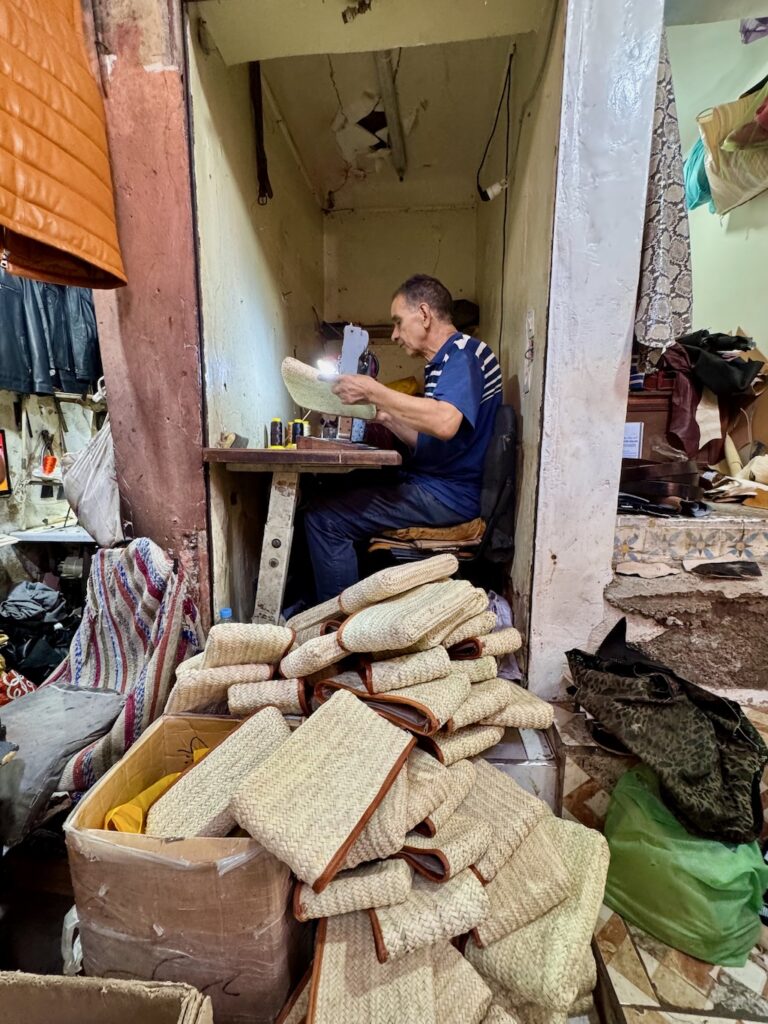
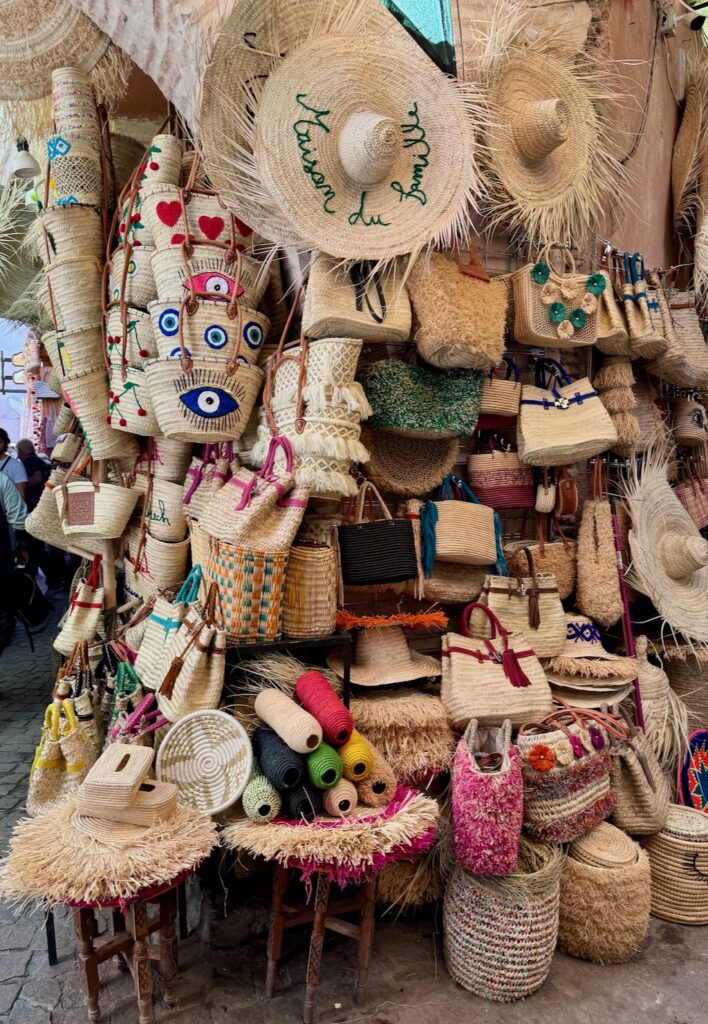
It’s not just garments and goods — leather creeps into the medina’s baskets too, stitched into handles and edging rims, the quiet detail that elevates a simple weave into something worth bringing home.
Blade in hand, he worked with the kind of quiet precision that only comes from doing something a thousand times — slicing the leather pieces that would be stitched into poufs. I bought a white one for my Pied d’Eze. It brings a splendid touch of the exotic into an everyday corner.
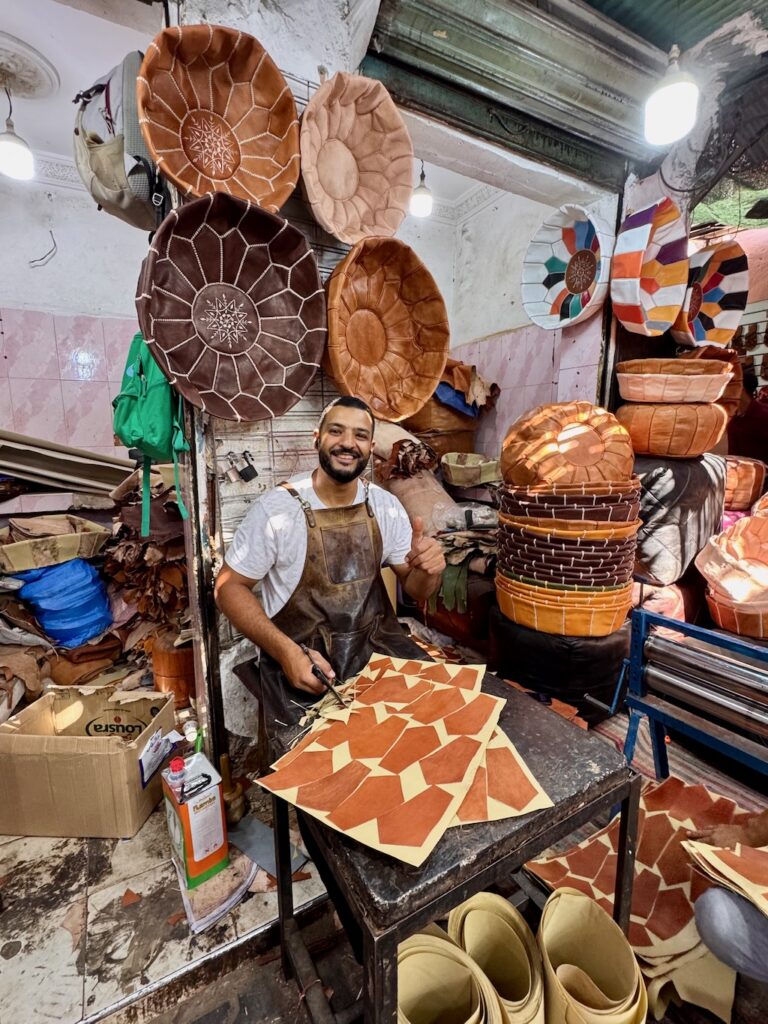
The beauty of taking home the poufs is that they take up very little space. I bought bed pillows to fill mine once I got it home.
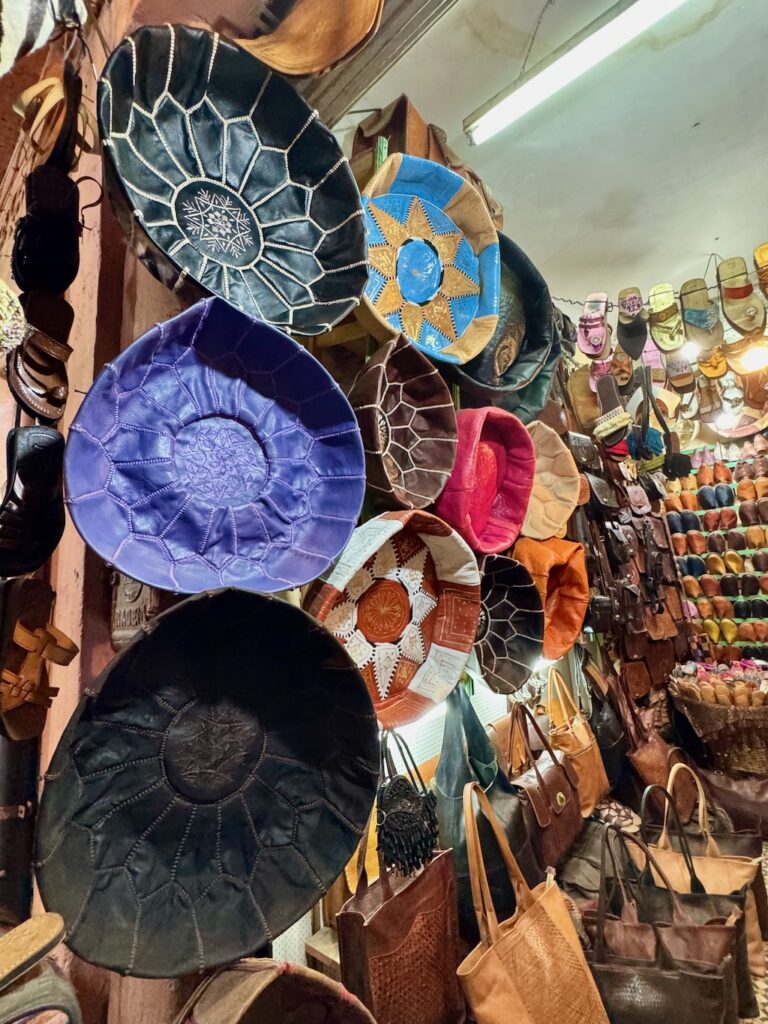
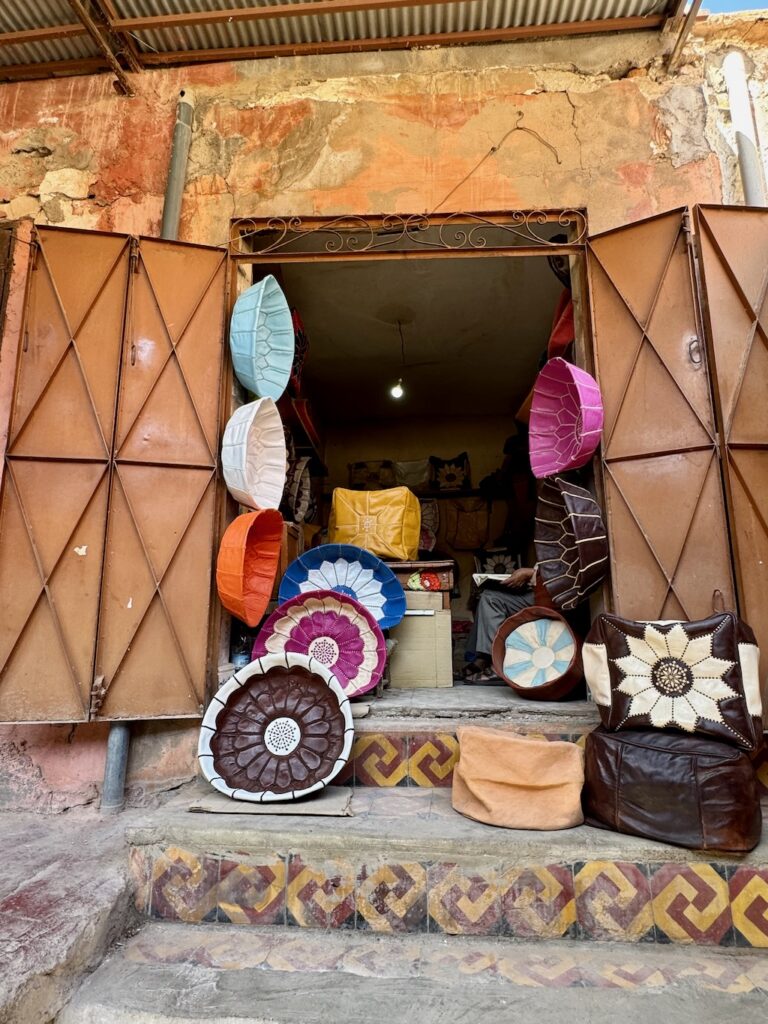
From raw hide at auction to this — the colorful transformation is remarkable.
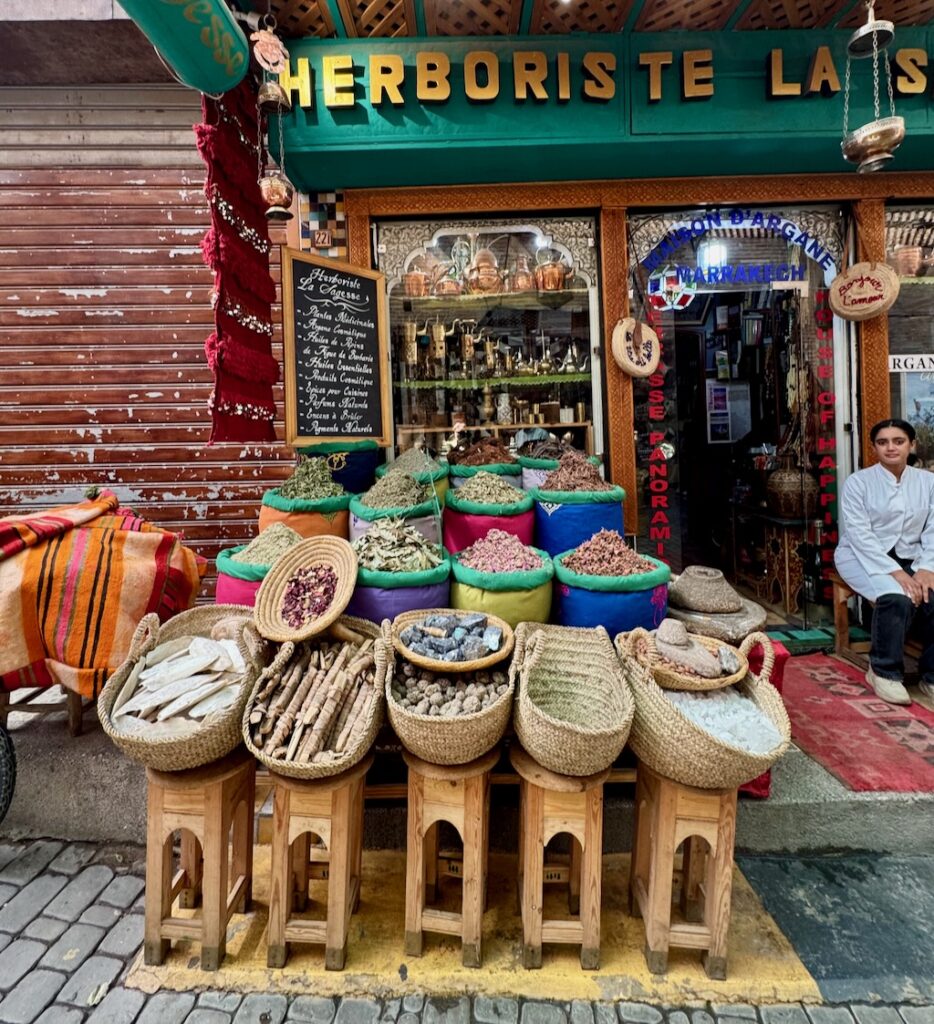
Products in the herboriste are mostly made outside of the souke but the herboriste can find a cure for whatever ails you. They can also call on local artists to give you a henna tatoo {you’ll see mine at the end of the post} or shoulder massage.
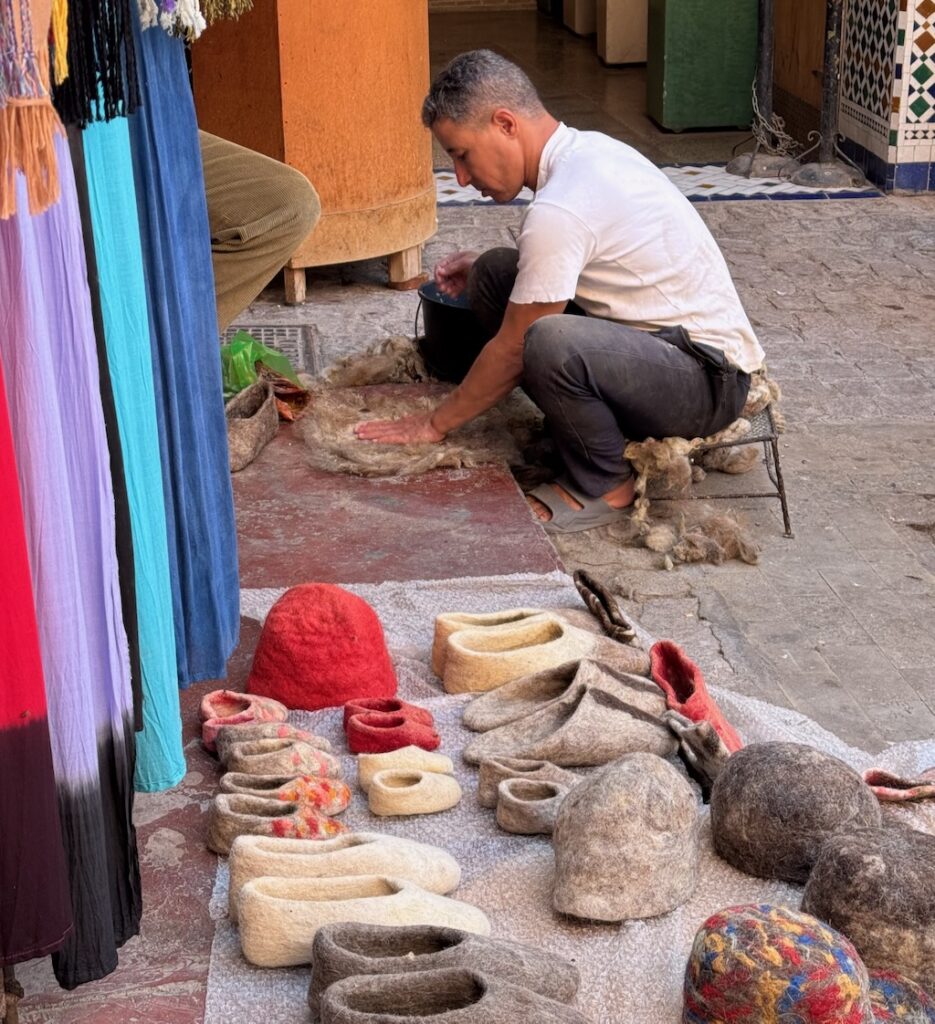
Felted wool is a beautifully different beast — thick, durable, itch-free and naturally water resistant. The boiling process gives it an elasticity that knitted wool can’t match, so these pieces will hold their shape for years.
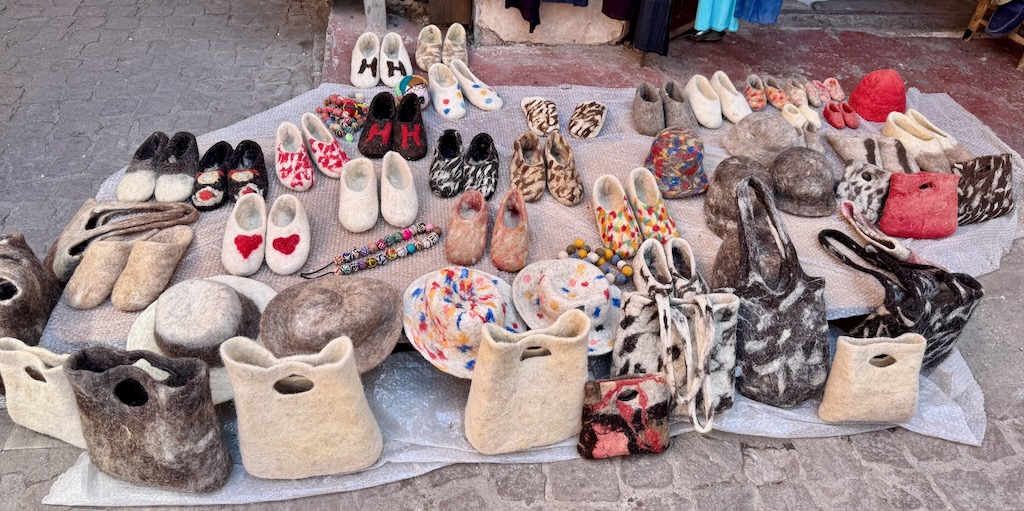
Wool fibers are covered in microscopic scales that, when exposed to heat, moisture, and agitation open and lock together permanently — creating a dense, breathable fabric that can’t be unraveled.
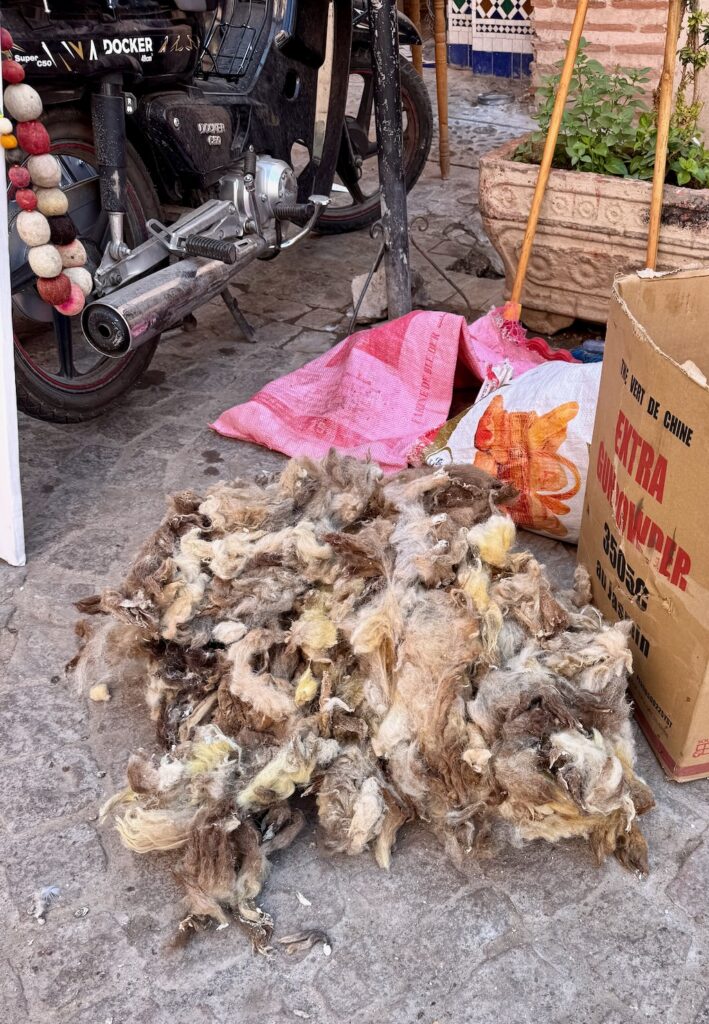
To make these pieces wool batts {see above} are laid in alternating directions, warm soapy water is drizzled over and the fibers massaged and rolled by hand until they felt and thicken into a sturdy sheet — then shaped and set in the sun to dry.
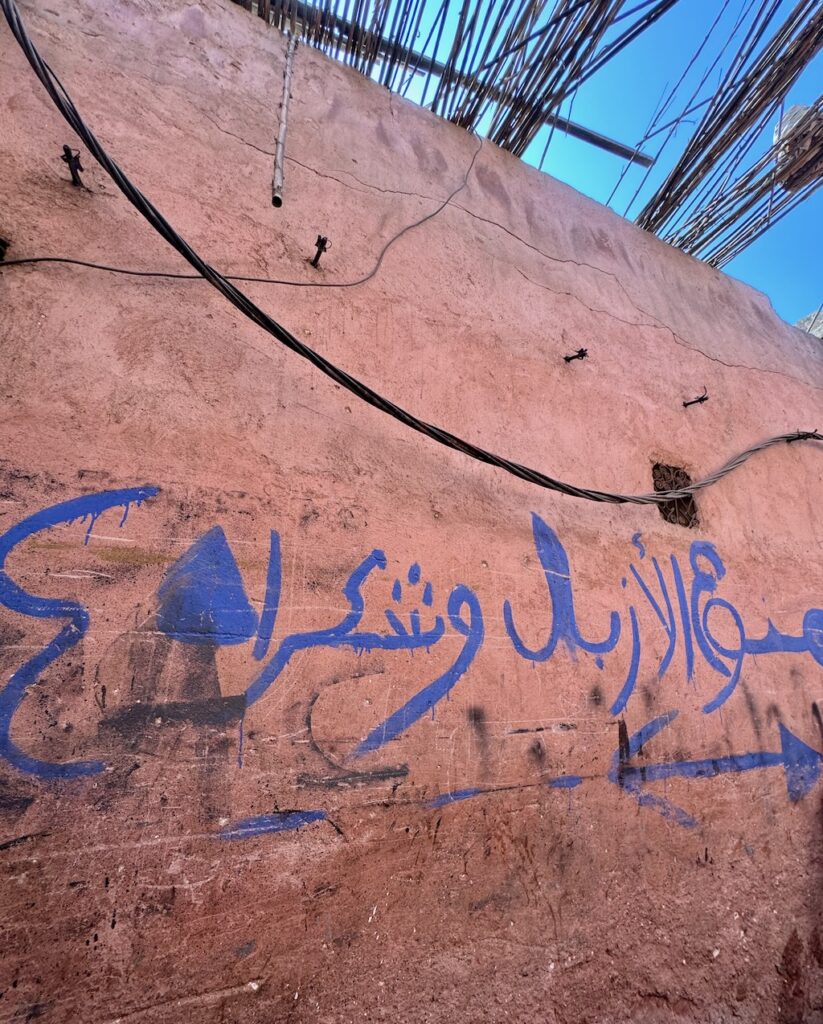
Butchers are everywhere in the souk — and apparently they deliver. Street stands grill kefta and kebabs for a quick bite, while hand-painted signs lure you upstairs to rooftop restaurants with sweeping views over the medina. For something to take home, clay vessels sit ready-filled with slow-cooked stews,
and there are plenty of my favorite, tagines.
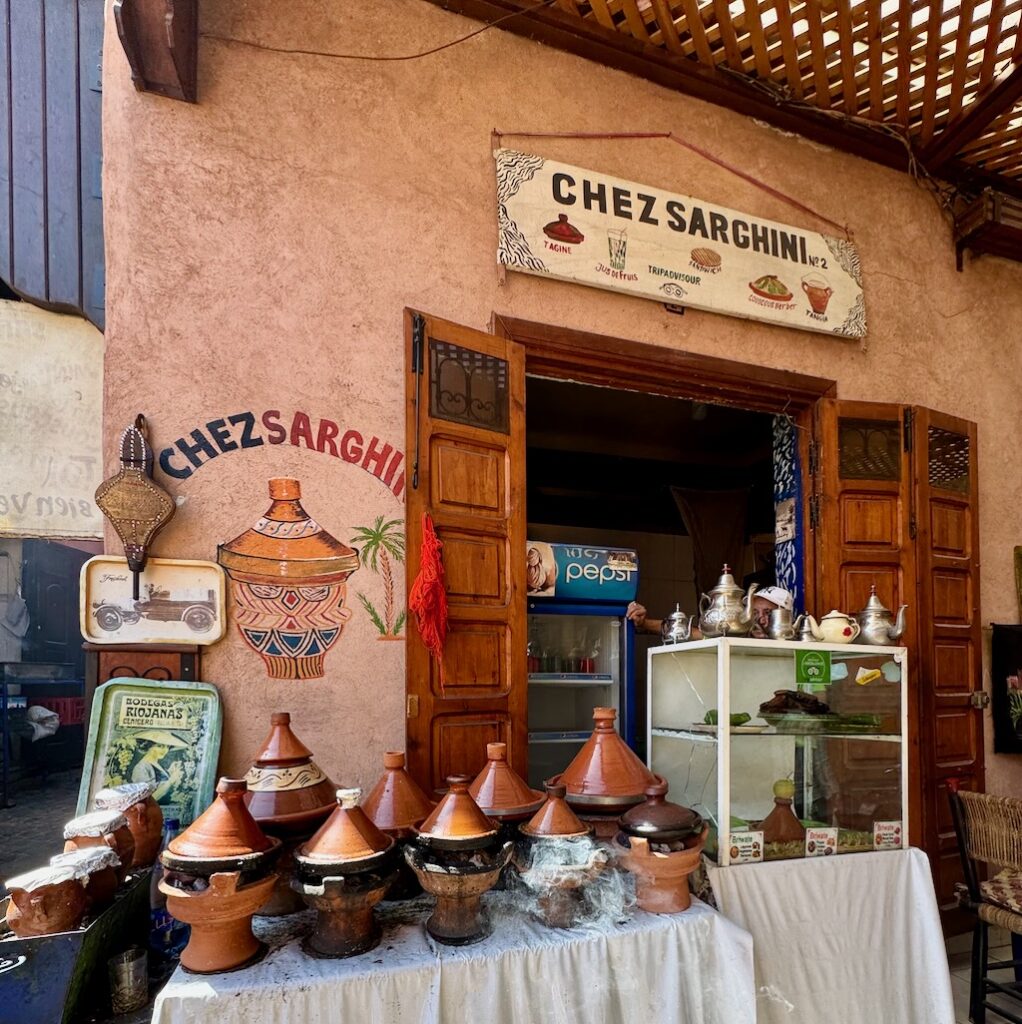
If you’ve been reading SM for a while, you know my obsession with tagines — a dish and a pot that share the same name, with contents that are always unique. The tagine traces its roots to the North African desert, where Bedouins slow-cooked tough meats with preserved lemons, olives and spices over open fires. The conical lid did the quiet work — trapping steam and returning moisture to the meat, coaxing tenderness out of the most unforgiving cuts.
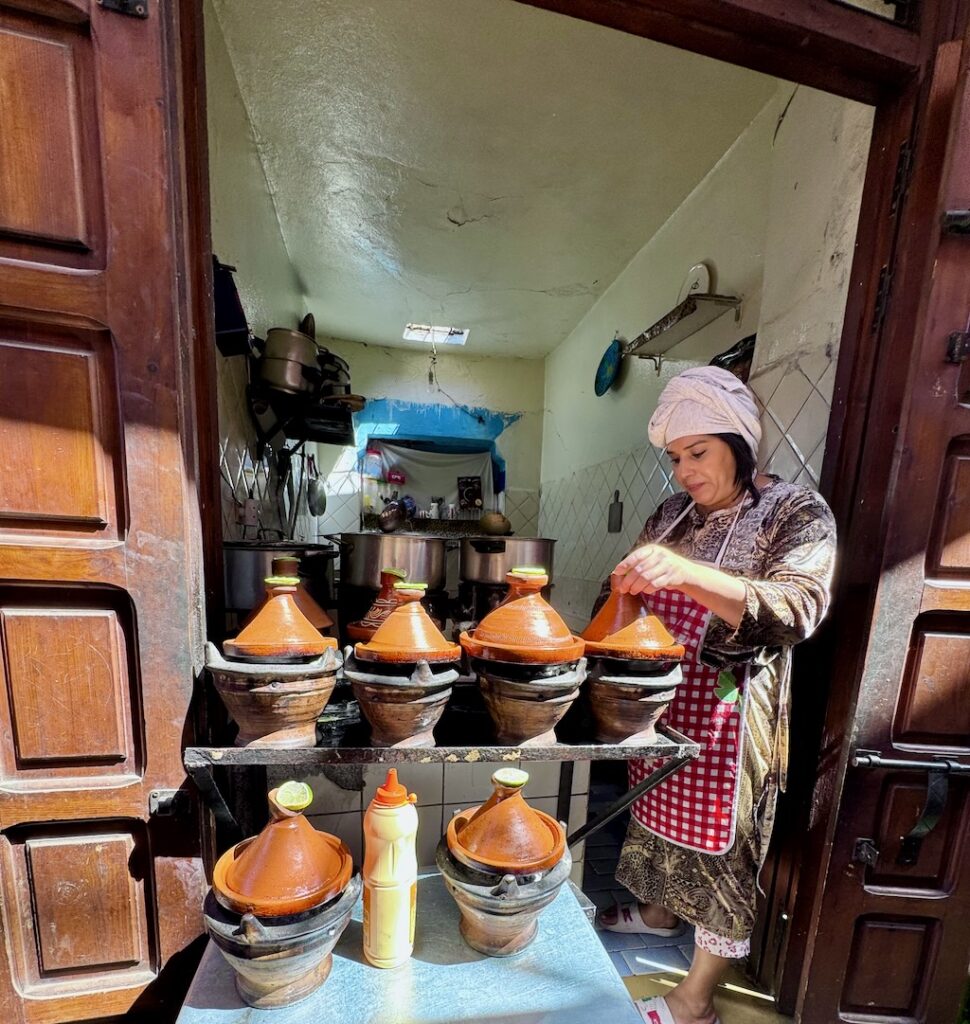
Coming up, I’ll be sharing a couple of my favorite tagine recipes. I hope they’ll inspire you to buy one {I’ll tell you how… okay, they’re on Amazon} — but you can absolutely make these recipes without a proper tagine pot.
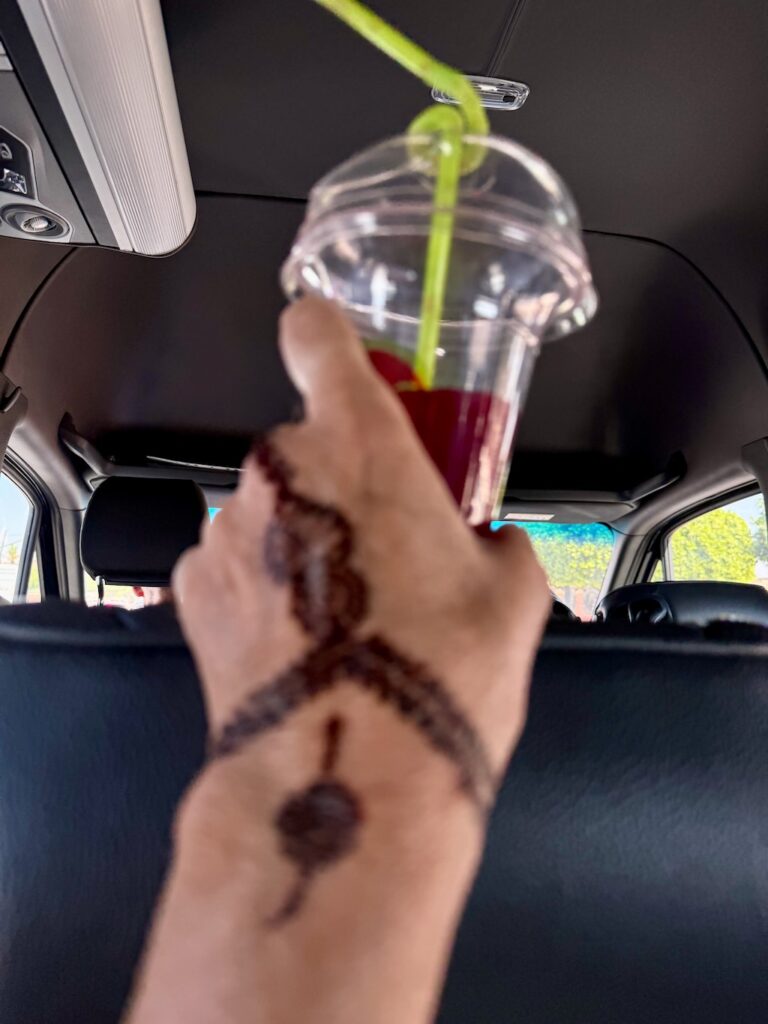
Fresh juice stands dot the souk at every turn. I’d never tried pomegranate juice before, so I decided it was the moment — my perfect roadie for the ride home.
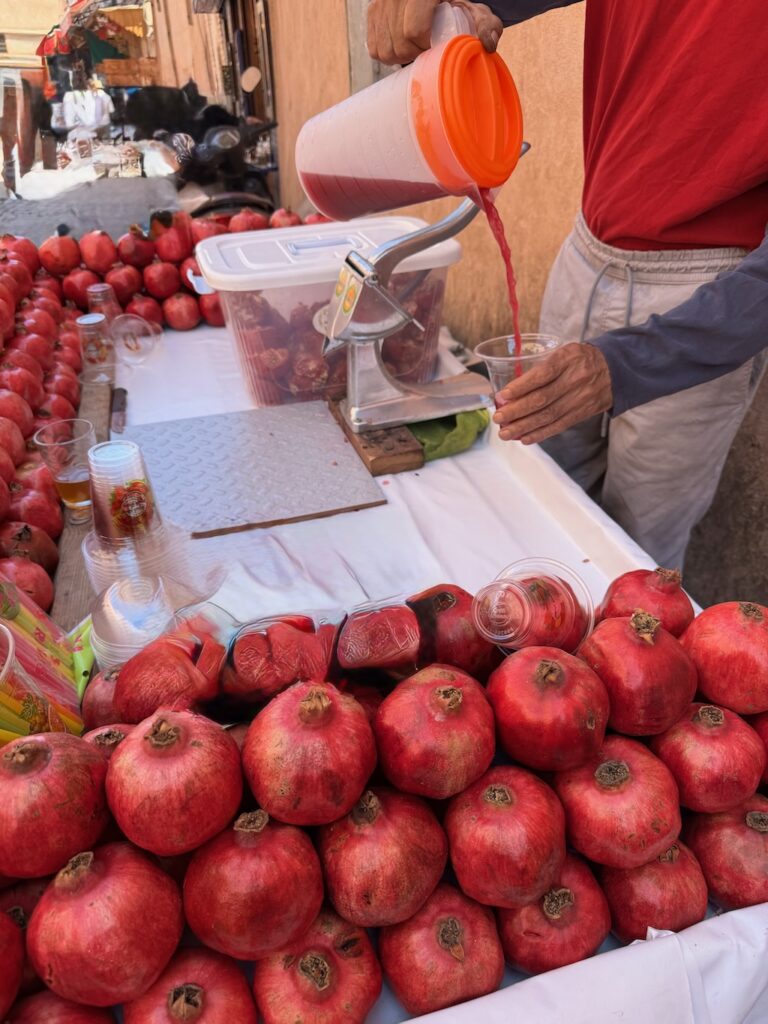
Blurry photo, perfect moment — fresh pomegranate juice in hand, traditional wedding henna on skin, and a Marrakech wedding waiting. The souk could keep its secrets for another day.
Bsaḥtak!

